Monday, April 13, 2009

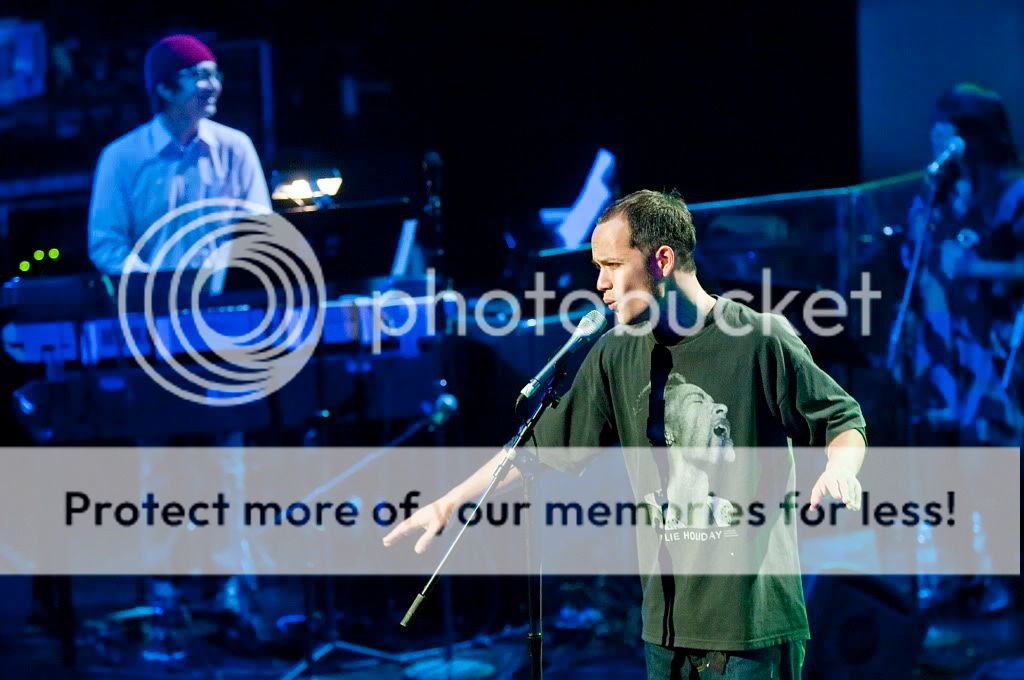
Album Review: Esau Mwamwaya and Radioclit-Esau Mwamwaya and Radioclit Are the Very Best


Speaking in superlatives is not always smart, but sometimes it's the safest way to be succinct. Maybe that was the line of thinking at Green Owl Records when they titled their mixtape, "Esau Mwamwaya and Radioclit are The Very Best." Honestly, they're not the very best, but they're pretty damn good. Esau Mwamwaya is a singer from Malawi who's making waves for his remix of MIA's Paper Planes internationally among the musically informed. This mixtape showcases his versatility as he sings over remixes of everything from Vampire Weekend's Kwassa Kwassa to Architecture In Helsinki's Heart It Races.

Esau Mwamwaya was born in Mzuzu, Malawi. He grew up in the capital, Lilongwe, where he played drums with various groups, including the Masaka Band. He was a good friend of the legendary Evison Matafale and they played together for several years before Matafale was killed in Malawi police custody in 2003.

In 1999, Esau moved to London, England and has, until recently run a second-hand furniture store in Clapton, East London. Esau's shop was on the same street as Radioclit's old studio, and after the Radioclit boys bought a bike from Esau, they invited him to one of their housewarming parties. Soon after, Esau and Radioclit became good friends and they started working on music together. Two years later, the project has a name, The Very Best.

Download the mixtape for free here


Book Review: Foundation


Foundation: B-Boys, B-Girls, and Hip-Hop Culture in New York is an in-depth academic exploration of one of hip-hop culture's most globally expansive exports that sets the record straight on where b-boying comes from and what it means. Incorrectly known the world over as breakdancing, b-boying is a form of Afro-diasporic competitive dance that developed in the Bronx and Brooklyn, NY in the early 1970s. Schloss sets the record straight on b-boying's roots by interviewing hip-hop historians and practitioners and getting down and hitting the floor himself.

Schloss has an authentic credibility that informs his narrative and gives his readers an insiders' perspective. He differentiates between correct and incorrect terminology, and tracks specific dance styles back to specific neighborhoods and even further back to dancers' African roots. Schloss gives hip-hop culture the scholarly credibility it deserves. I highly recommend this book to anyone with at least a passing interest in hip-hop culture, but I must warn you, after turning a few pages, you will want to break out your adidas running suit and start popping, locking, and hitting the floor to some breaks yourself.

Foundation


Buy it on Amazon!


Monday, March 30, 2009

Extra Golden @ Le Poisson Rouge April 11th

Fresh off the heels of the African Soul Rebels Tour opening for Baaba Maal and Oliver Mtukudzi all over the UK, Nairobi-based Benga rock outfit Extra Golden is coming to Le Poisson Rouge. The night will also feature an acoustic performance from the lead singer of the fantastic New York City-based Senegalese reggae band Meta and the Cornerstones and the brilliant short film "African Booty Scratcher" (10 min.) by Sierra Leonean filmmaker Nikyatu Jusu. Doors open at 7pm. Tickets are only $15. Advance tickets available at www.lprnyc.com are highly recommended. (Le) Poisson Rouge is located at 158 Bleecker Street.


SambaDa @ SOB's April 4th


SambaDá is one of the hottest emerging groups on the West Coast music scene; with its mixture of hard-hitting Brazilian grooves, mesmerizing visuals and stunning capoeira demonstrations, the 7-piece collective has captivated audiences up and down the West Coast. If you like to move, check this out.

Wednesday, March 11, 2009

DVD Review: Ladysmith Black Mambazo Live!

Ladysmith Black Mambazo has sold more records than any group of African musicians in history. Anyone who has had the privilege of seeing them in concert knows exactly why. For those who haven't, their new dvd "Ladysmith Black Mambazo Live!" is as close to the real thing as you can get. The group's beautiful harmonies and dynamic stage presence make their concert a breathtaking experience.

Joseph Shabalala formed Ladysmith Black Mambazo in 1964 after hearing the beautiful harmonies of isicathamiya (the traditional music of the Zulu people) in a series of dreams. Ladysmith, KwaZulu-Natal is the town from which Shabalala's family comes,; Black is the color of the black ox (the strongest animal on a South African farm); and Mambazo is the Zulu word for axe, picked due to the group's ability to chop down their local competition.

While most people credit Paul Simon for Ladysmith's long and successful career, they have earned every bit of success they're experienced due to their commitment to their traditions and electric stage presence. They were a local sensation before Paul Simon introduced them to the world, and they have opened doors and ears for lesser known African musicians.

"Ladysmith Black Mambazo Live" captures the beauty and magic of their live performance, but the real thing is even more magical. If you ever have the opportunity to see them live, do yourself an enormous favor and go see them. They represent what's beautiful in the world.


Buy the dvd here

Tuesday, March 3, 2009

New Video from Stuart Bogie's Superhuman Happiness

Stuart Bogie, tenor sax player of Antibalas, TV on the Radio, and his own group, Superhuman Happiness recently released a new video for a track off their album--Mr. Mystery. Check it out!


Stuart Bogie's Superhuman Happiness

Thursday, February 26, 2009

Sila and the Afrofunk Experience-Black President


Sila and the Afrofunk Experience are a tight Afrofunk band out of San Francisco. Check out their latest video celebrating the first American Black President, Barack Obama:


Sila and the Afrofunk Experience

Wednesday, February 18, 2009

Interview with Emmanuel Jal


Very few people in the world have the same credibility and vantage point as a musician speaking out against an issue as Emmanuel Jal. Having lived through being forced to fight as a child soldier in Sudan and Ethiopia at a young age, he has dedicated his life to helping the suffering people of Sudan. The charity he founded-Gua Africa-seeks to build schools for former child soldiers to help rebuild their lives. I had the honor of speaking with Emmanuel while he was passing through NY on his international tour promoting his album and documentary about his life, War Child:

The Afrobeat Blog: When did you first listen to hip-hop?

Emmanuel Jal: It was in kenya on kenyan television and the radio station, and guys bringing in tapes to play. The first music I listened to was Tupac in the old days. I used to think they're kenyans, it took me a while to realize they're not kenyans, they're americans.

The Afrobeat Blog: How did it relate to the music of your upbringing?

Emmanuel Jal: The things they used to talk about is what I wanted to listen to. Talking about being chased by police, drugs in the community, It was like they were communicating, and that made me interested in it.

The Afrobeat Blog: Who did you listen to then and now?

Emmanuel Jal: Biggie, Lost Boys, Ice Cube, Public Enemy. Now I listen Nas, I listen to anybody, Kanye West, Talib Kweli, Mos Def, I listen to all of them, because I'm still learning the music. I'm still developing my style, my lyrics, but at the same time I'd like to maintain my dignity.

The Afrobeat Blog: What do you think of American hip-hop, what would you like to see American hip-hop be that it isn't?

Emmanuel Jal: Let's be fair, I don't blame the American hip-hop artists. It's the record companies that are pushing products that are not constructive to the community. You can also go to the movies, there are a lot of conscious movies that are put down, they're not allowed to come out, they're oppressed. MTV won't play anything that doesn't have naked women, or half-naked women. Anything that has violence or sex they love it. Violence and sex sells. But the thing is, we have to think about the children, because the children then think, 'ok this is how the world is supposed to be.'

The Afrobeat Blog: What motivated you to single out 50 Cent on your latest album?

Emmanuel Jal: I took a shortcut picking 50 cent because in this generation 50 Cent is the top. Today, everywhere you go every kid wants to be like 50. So I say to him, 'Look man, you gotta be careful, a lot of kids look up to you. You can make a lot of money but you're going to do a lot of damage to these young peoples' lives.'

The Afrobeat Blog: What other African musicians inspire you?

Emmanuel Jal: K'Naan, Dada J, theres a lot of hip-hop musicians in Africa.

The Afrobeat Blog: How do you use your music to deal with all you've been through?

Emmanuel Jal: Music is a form of therapy for me. Music is the only thing that lets you speak your mind, your soul, your emotions, and influences you directly without you knowing it. So what I've found about music is it makes me happy, the feeling it gives me now.

The Afrobeat Blog: Do you feel a responsibility, or a calling, to use your music to effect change and get across an important message?

Emmanuel Jal: The way I look at, I'm writing down history. I'm bringing what happened in my life to the international community. I feel responsible, I'm like the voice of those communities. At the moment, what I have in mind, my experiences they go and they tell my story.

The Afrobeat Blog: As someone who's been negatively effected by a serious problem facing the world that's largely overlooked, do you feel more musicians should use their platforms as musicians to draw attention to the world's problems?

Emmanuel Jal: Musicians should think and reason because we're in a time of crisis. We're in a time of economic crisis, we're in time of global warming, to get people aware of what's happening, the shortcut is music. We gotta inform people, music can help pass informational messages easily. It's time for us to talk about issues affecting our nations.

Emmanuel Jal: I believe I've survived to tell my story to touch lives. If you're a musician, you're an emotional leader. If you're an entertainer, an actor, you're an emotional leader. You make people laugh, people are stressed, they're looking for who will make them laugh, who will make them dance, and what do they have to say? Whatever you tell them they'll take. If you tell them, 'Fuck you fuck you,' they'll scream, 'Fuck you, fuck you.' And that's what they're gonna do. If you say, 'Smoke weed till I die,' they'll say, 'I smoke weed til I die.'

The Afrobeat Blog: Do you feel a responsibility to talk about some of your most shocking and painful experiences in order to induce a reaction from people and inspire them to act?

Emmanuel Jal: It just comes out natural, the way I tell it, I'm writing down history I'm telling a story. It's not about getting them emotional it's about telling the truth. This is what happened. In one song I say I was tempted to eat the rotten flesh of my comrades, because I was starving with nothing to eat. That's a situation I've lived.

Emmanuel Jal: I have no choice. I had no childhood. I had no family to take me to school, pay my school fees, play video games, play football, have a life, get christmas gifts. I didn't have that. My childhood has been stolen. The only thing I have is to talk about what happened to me, to spread the voice of those kids that have none. My country is still at war, people are still dying. I'm in America sleeping at a 5-star hotel, but the only thing I can do is talk about my story to give hope to people who are investing in Sudan. an aid worker invested in me, Emma McCune, and here I am today honoring her. I wrote a song about her. Now I'm in a campaign to build a school in her name where I only eat one meal a day until I raise that money. I'm at day 75.

The Afrobeat Blog: Are you hopeful with Obama coming into office, America will finally do something to stop the violence in Sudan?

Emmanuel Jal: The problem with us human beings is we rely on someone else. Obama being the president can inspire to achieve things. I'm not going to rely on Obama to make things happen. I'm pushing for the people because only people will make things happen. If he gets 1million people demand peace in Darfur, it will happen overnight. This is a democratic country. There is an economic crisis in America, so we cannot depend on Obama to solve our problems. Anyone who relies on Obama to solve anything for you, is going to be depressed.

The Afrobeat Blog: What can people do to make a difference in Sudan?

Emmanuel Jal: The best investment now, is investment in someone. If someone wants to give aid to Sudan, buy the tools for success and educate them. Don't just leave them crippled and dependent. Build schools. The charity i have is concentrating on schools because when you build schools, you send a message. Out of every 5 kids who go to school in Sudan, one finish primary school. And they don't go to secondary school. The rate of kids growing up and finishing school is very low.

Emmanuel Jal: We have environmental issues. We need farmers to plant more crops. We need to teach people about the climate and how it's changing. and how to prepare and how they can participate in taking care of the earth. We need to build schools in the refugee camps so when they go home, they can make it.

www.Gua-africa.org


Sunday, February 15, 2009

War Child Film Screening-Runs Through 2/22/09 @ Firehouse Theater


War Child, an award-winning documentary directed by C. Karim Chrobog, chronicles the amazingly trying but hopeful odyssey of Emmanuel Jal. A former child soldier of Sudan's brutal civil war, he is now an emerging international hip hop star sharing a message of peace for his war-torn land and beloved Africa.

Emmanuel Jal
is one of Africa's fastest rising stars and a true advocate for his tragic cause. Child soldiering is something the world largely ignores. Having lived through unspeakably horrific experiences, Jal feels a responsibility to share his story. War Child the documentary is the third incarnation of Jal's message, having released an album and a book this year.

The Award Winning film War Child will run in Harlem at the Faison Firehouse Theater (6 Hancock Place, 124 th Street between St. Nicholas & Morningside Aves.) now until February 22, 2009. Tickets are $10.00. Group Sales are available (10 or more).
Showtimes: Tuesday – Sunday 6:30pm & 9:00pm or go to: www.WarChildMovie.com

Thursday, January 29, 2009

Interview with Asa

(Photo by Andreas Terlaak)

If Bob Marley and India Arie had a daughter and raised her in Nigeria, she would probably look and sound like Asa, the Nigerian singer who's first full-length album just hit U.S. markets January 27, 2009 on Downtown Records' new imprint, Mercer St. Records. I had the pleasure of speaking with the budding African musician this afternoon:

The Afrobeat Blog: Who and what has shaped your musical identity? When I listen to you, I hear a lot of Bob Marley, a little India Arie, What artists, what experiences have influenced your music the most?

Asa: Bob Marley, Fela Kuti, I grew up around music, my father had a lot of records, Aretha Franklin, Miriam Makeba, Yoruba Classic songs I listened to all kinds of music, I drew inspiration and picked pieces from everybody. Coming from the Yoruba culture there's a strong musical identity blending with my language to create what I do.

TAB: How did growing up in Lagos effect your perspective on politics and world affairs, and how has that manifested itself in your music?

Asa: Growing up in Lagos, you get to see the realities of life. Things are not perfect. My parents were struggling parents. We were always looking for a better future, but in my time I think things haven't changed they've only gotten worse. I felt I needed to use my music to talk about this, you can't escape the political sides of life when you live in Nigeria

TAB: Do you feel a responsibility to represent the continent, do you feel you've been typecast at all due to your Nigerian heritage?

Asa: Yes and no. I come as an African singer someone who originated in Africa but talking about things that relate to everybody. I also use it as way to introduce myself, my culture and my language.

TAB: Do you feel like it's more difficult for African artists to achieve mainstream success in the US or Europe w/o being lumped into a "World Music" category?

Asa: I don't like to be seen as World Music, that's a misconception. I am a singer who puts my roots down in Africa for you to see, but it doesn't matter my nationality,

TAB: With the inauguration of Barack Obama, do you feel there's a sense of hope in Africa that the U.S. will start to pay attention to the continent's problems?

Asa: Things have changed, but I don't know for Africa or the rest of the world. Problems have been coming for a long long time. With Obama people will begin to change their ways of thinking. For me there are things that I can think are impossible because of who I am and because of the color of my skin. With him I think those ideas will change. But in terms of problems, I'm not expecting a miracle. It takes time, I think we're on the way. Even America too is on the way. The way America sees the world will change Nations, people, will look at themselves differently and hopefully that will lead to change.

TAB: Being a Nigerian Woman, are you inspired by Fela's creed and legacy--Music is a Weapon--using your music to effect positive change both in Africa and all over the world?

Asa: Fela used to be like the newspaper. You would get up in the morning and read the newspaper like listening to Fela to know what's going on, people who were educated and informed were listening to Fela. While I was growing up and listening to this man, I saw a lot of things, I saw courage, I saw the ability to use music as a weapon to educate and inform people and also to connect other people, Africans, to give them hope and also have the rest of the world informed about Africa and its people and the world at large. Fela has helped me see this way to use my music, not only Fela but Bob Marley, today we still listen to him, we use his lyrics in our everyday experiences. They used music as a tool to bring people together. I admired those people I wanted to go that way the best way to do it was to have my individual voice, but also borrow from those people.

TAB: Who are some other African musicians that inspire you?

Asa: Angelique Kidjo, Femi Kuti, Keziah Jones, Lagbaja, they all inspire me in different ways.

Buy her new album here, check her out on myspace

Thursday, January 15, 2009

Chico Mann and Superhuman Happiness @ Public Assemby-Feb. 10th


While it's been a great run, I'm peacing out of this crazy city to explore the world, but before I go, I'm throwin' one last jam with two of my favorite bands in the city, Chico Mann and Stuart Bogie's Superhuman Happiness. Both bands feature members of Antibalas, one of the baddest bunch of musicians on the planet known for making dance floors shake.

Chico Mann is probably my favorite band in the world. Put simply, it's electronic afrobeat utilizing the Casio Keyboard that will make you feel like you're either dancing in the 1980's or 2080's whichever way you run with it. Marcos Garcia, guitar player of Antibalas, takes it back to the old school while keeping it contemporarily funky. I'll let Turntable Lab tell you all you need to know: "…This is the future of music, in case you didn't know. [Chico Mann] has come from the future to show you how the past should have sounded. This time-traveling mastermind is basically the Jersey City Cuban James Brown of the Casio. You heard it here first…Welcome to the future past. Recommended."

Superhuman Happiness is the musical love of Stuart Bogie's life, tenor sax player of Antibalas and all-around awesome dude. Using layered horns and funky guitar and bass lines, Superhuman Happiness will make you shake your Superhuman ass happily.

While this won't be the last show in Brooklyn at which I shake my funky ass, it will be for a while. If you're reading this blog, you know I know what's up when it comes to music live and recorded. I can objectively say, this will be a show you should not miss. The quality of musicianship, the people who will be in attendance, and the pure fact that I won't be gracing any Brooklyn venues with my funky self for a while...you basically have to show up.

Public Assembly-70 N. 6th St.-Brooklyn, NY-9pm

Chico Mann-Who You Runnin' From?


Superhuman Happiness

Monday, January 5, 2009

Global Fest-Webster Hall-January 11, 2009

Global Fest came back and represented itself as the best globally conscious music presentation in New York again this year. Although the extreme disapointment of Femi Kuti dropping out of the program definitely was felt the night of the concert, Kailash Kher and Kailasa filled the headliner void 100%.

For someone such as myself who isn't particularly into Indian music, I was totally enraptured by the energy of the performance as the ensemble filled the Grand Ballroom at Webster Hall with Baliwood delight and fervor.
Global Fest


Friday, January 2, 2009

Toubab Krewe @ SOB's Jan. 8th 2009

Toubab Krewe, a band out of Asheville, NC that fuses traditional West African musical styles with American Southern blues, is returning to SOB's this Thursday night. Having seen them live before, I know they can put on one hell of a show. Definitely come check them out if you like African music, or if you simply like to dance.

Toubab Krewe Myspace

Sunday, December 28, 2008

The Year in African Music


So everybody's doing it. I was asked along with my co-worker Tebukozza Babumba-Olatunji to do it. I did it. Here it is...my top ten African Albums of the year.

1. Congotronics 3-Kasai All-Stars

2. Africa to Appalachia-Jayme Stone and Mansa Sissoko
3. Day by Day-Femi Kuti
4. Many Things-Seun Kuti
5. Mandé Variations-Toumani Diabate
6. Asa-Asa
7. Dununya-Kakande
8. Warchild-Emmanuel Jal
9. Rebel Woman-Chiwoniso
10. Made in Dakar-Orchestra Baobab

Album Review: The Macrotones-Wayne Manor


Wayne Manor, the debut album from The Macrotones, an eleven-piece afrobeat band out of Boston, is tight display of funk and percussive aggression that shows a lot promise for the group. Certain songs attack and punch you in the face from start to finish while others slowly creep, ebb, and flow, much like some of their biggest influences, Budos Band, Fela Anikulapo Kuti and Afrika 70, and Antibalas.

Funky basslines and tight rhythm section lay down a tight groove over which the horns drive the action and melody of the song in place of a vocalist. While there are only three horns in the eleven piece band, Nate Leskovic on trombone, Andy Bergman on baritone sax, and Jason Buhl on tenor and soprano, make their presence felt with authority with a heavy, deep register.

The percussion section really takes the identity of the album's overall sound. Since The Macrotones don't have a vocalist, they have an elongated, open texture. The clave, shekere, congas, and trap drums fill in the gaps and give the album its lasting impression.

The Macrotones are part of a growing faction of afrobeat bands throughout the east coast. Inspired by Fela and his contemporary disciples, they take on the same challenge as their peers: to continue the legacy of afrobeat with their own sound.

The Macrotones

Wednesday, December 17, 2008

Red Hot Rio-BAM-December 5th, 2008


It was a night of beautiful music, dancing, and people from start to finish at the Brooklyn Academy of Music's Red Hot Rio where 16 of the best Brazilian artists in the world touched the stage both contemporary and classic. From bossa nova to samba soul, Jobim to Tropicalia, it was a celebration of Brazilian culture that had the entire BAM Howard Gilman Opera house dancing and going crazy.

The stage was absolutely filled to capacity with Brazilian musicians. Curumin, Ceu, Bebel Gilberto, Jose Gonzalez, and Otto, rotated singing in front of the superstar backing band of Joao Parahyba, Moreno, Domenico, Kassin, Stephane San Juan, Alberto Continentino, Money Mark, Janja Gomes, Ze Luis, Jorge Continentino, and Carlos Darci. Featuring trumpet, trombone, tenor sax, baritone sax, two guitars, bass, 3 percussionists, and 3 singers, the total sound throughout the night achieved beautiful and rich melodies and harmonies, that resonated throughout BAM's beautiful opera house and were accentuated by visual projections.

It started with Jose Gonzalez serenading the audience with his velvety voice. Then Curumin came on the mic and picked things up a notch. Ceu followed and enchanted the crowd with her beautiful voice. Bebel Gilberto came on next and the crowd got progressively warmer. Then Otto came out and got everybody jumping. Things calmed down for a bit, but then the Harlem Samba drum line walked down the center aisle and onstage making the entire audience get on their feet.

Saturday, November 15, 2008

Album Review: Curumin-Japanpopshow


Japanpopshow, the new album from Curumin out November 4th on Adrenaline Records, could be the best samba-funk album of the century. Hailing from Sao Paulo, Brasil, Curumin embraces the many sounds to which he has been exposed to create an eclectic, consistently funky sound. Hip-hop, reggae, bossa nova, funk, and rock are all abundantly prominent throughout the album with certain songs featuring one sound more than another.

Curumin has been making music from a young age. He started his first band at 8 and was gigging regularly as a drummer in clubs across Sao Paulo at 14. At 16 he learned to play keyboards. Eventually he enrolled in music school and formed his first band, Zomba, which focused on Brasilian classic funk with dj accompaniment.


Chief Xcel of Blackalicious heard Curumin's last record, Achados e Perdidos, while touring in Brasil and brought him into Quannum Projects. Japanpopshow is the result. This album has one of most inventive, funky sounds of any I've heard this year. Curumin's playing at BAM December 4th; if you like funky, original music, check it out.

curumin myspace


Sunday, November 9, 2008

Album Review: Day by Day by Femi Kuti


Day By Day, the first studio album by Femi Kuti in seven years out November 18th on Downtown Records, re-established the prince of Afrobeat as a voice in the contemporary Afrobeat community. His trademark punchy horn lines and passionate vocals represent Femi's style having grown but not changed significantly. He still has his own style, his own sound, and his own message, different from his father Fela and brother Seun.

As the son of Fela Anikulapo Kuti, Afrobeat pioneer, African musical icon, and international protest figure, Femi played in his legendary father's band, Egypt 80, from a young age. He later broke away from Egypt 80 to start his own band, Positive Force, which played at The Shrine, Fela's home club in Lagos, Nigeria, one night a week. Femi has long displayed his father's passion for social justice and political action, but has differed from Fela on many fronts including his religious views and AIDS.


A few of the tracks on Day by Day are studio versions of songs performed on Africa Shrine, Femi's live album and Concert DVD such as "Oyimbo" and "One Two". Almost every song on the album has a strong political message like "Tell Me" and "Demo Crazy". Several of the tracks have a soft, jazzy feel at times such as "Tension Grip Africa" and "Untitled". Using the organ, guitar, trumpet, and various percussion instruments, Femi creates a soft backdrop against which the powerful horn section of Positive Force clashes.

"Do You Know?", a track that starts off with a funky bass line and Femi asking, "Do you know Miles Davis? Do you know John Coltrane? Dizzy Gilespie? Duke Ellington? Do you know Billy Holliday?" has a particularly funky groove. The guitar and organ parts are emphasized in a sly, scratchy manner in the early part of the song before the horn section comes in as a whole and then solos. Femi has been honing his keyboard skills for the past several years. His progress is evident on this track as the funky jazz vibe furnished by the keys and guitar parts is especially accentuated.


Some of the tracks are studio versions of songs performed on Africa Shrine, Femi's live album and Concert DVD such as "Oyimbo" and "One Two". Almost every song on the album has a strong political message like "Tell Me" and "Demo Crazy".

When younger brother Seun released his album Many Things earlier this year, a lot of people in the music community were ready to forget about Femi. People were ready to ordain Seun as the leader of the next generation of Afrobeat. Seun and Femi are very different and Day by Day is a clear example why. Seun, playing with Egypt 80, is picking up where his father left off, playing the same style and representing Fela's legacy. Femi has never been concerned with being the next Fela. Postivie Force and Egypt 80 co-existed for several years before Fela's death. Femi has always had his own style and sound, and Day by Day is a continuation of Femi's legacy of originality.

Femi Kuti Myspace


Thursday, November 6, 2008

The Budos Band Returns to SOB's-11.13.08


The Budos Band, a tight ass band out of Staten Island with a sound that's too funky for words is coming to SOB's next Thursday night. They mix Afrobeat, Soul, Funk, Ethiopian Jazz, and Rock to create a sound that's downright danceably funky with an attitude. Their music has been featured in movies, commercials and NFL films. It's the type of music you imagine playing when a bad-ass Latin mob boss walks into a crowded room and everyone makes room for them. They're on Daptones Records and part of the Brooklyn/NY funk scene that includes Antibalas, Dap Kings, and Chin Chin. They know how to bring the funk hardcore. Definitely a show worth checking out...

Wednesday, October 29, 2008