Monday, October 11, 2010

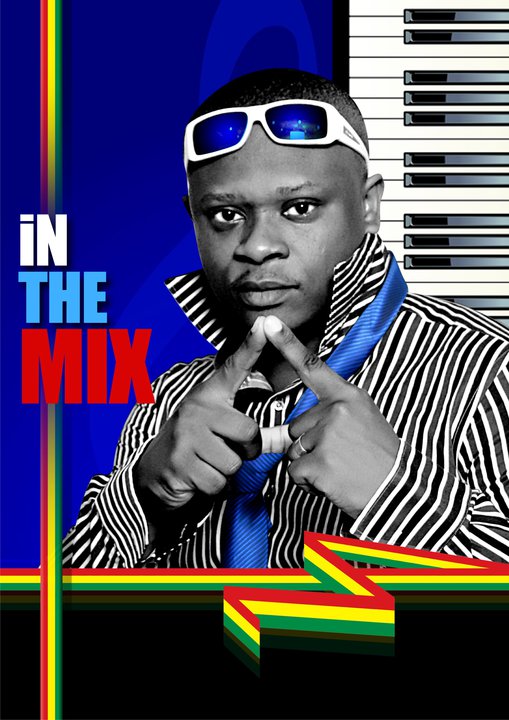
Album Review: Afrolution Vol 2-The Original African Hip Hop Collection-Various Artists

Afrolution Vol 2 is an impressively diverse collection of African Hip Hop that represents artists from multiple regions of the continent and highlights the emerging African hip-hop movement. This album makes an excellent introduction to African hip-hop to an interested observer or a great addition to the collection of a connoisseur. Representing French or English speaking countries, this album is a masterful collection of songs that represent the cutting edge of African music today.

Negrissim - My People by afrobeatblog

Afrolution is a UK-based website, label, and web TV station offering videos, interviews and more, all focused on the ongoing wave of young musical acts emerging from the continent. This is their second African hip-hop compilation. Their first, Yes We Can, featured artists like K'Naan who have left the continent. This album features mostly artists who still reside, representing twelve nations in East, West, and Southern Africa.

My favorite track off the album is Green Card by Wanlov the Kubolor from Ghana. It details a common predicament immigrants face, "Just to get of the slave yard, I must fight to get us a green card." Other tracks that distinguish themselves from the rest are She Smiles Easy by Goreala from Kenya and My People by Negrissim from Cameroon. Some tracks incorporate live instrumentation into their presentation such as Trenton and The Free Radicals and Tumi and The Volume, both from South Africa.

The wide range of nations represented on this album shows how wide ranging the African hip-hop movement is becoming, and outlets like Afrolution are greatly contributing to its proliferation.

Sunday, October 3, 2010

Interview with Martin Perna

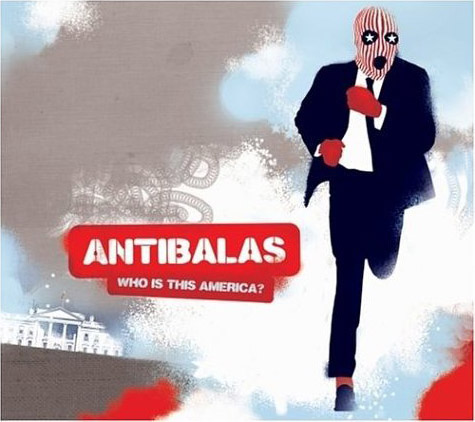
Of all of the musical accomplishments Martin Perna has claimed throughout his career, he is probably most famously credited as founding Antibalas. I had the pleasure of speaking with Martin last week about the re-issue of Who Is This America?, the state of American politics, the state of Antibalas as a band, and a whole lot more:

Who Is This America Dem Speak Of Today? by afrobeatblog

Marc Gabriel Amigone: When I listen to Who Is This America, I feel like I'm listening to a horror movie soundtrack. How does that jive with the mood and attitude you guys were going for when you wrote the album?

Martin Perna: Haha, well, the United States is definitely in the role of the climax of a particular type of horror movie in that time. You know, we didn't really sit down and say let's write a concept album, let's cover these songs. It was what was in everybody's head. And it was in the heads of the specific people who wrote those songs, but because we work as a collective, it was in everybody else's heads too. We were like alright, we see where you're coming from, cool, I didn't write it, but I'm down with it, let's do it, let's record it. And living in New York, the days after September 11th were some of the brightest moments that we had ever experienced living in new york in terms of seeing how kind and how generous and helpful people can be like that tragedy created a sense of community at least for a minute, that has never been created, at least in our lifetimes before or since. That moment was hijacked. For me the tragedy of the planes was a tragedy, but the bigger tragedy was how that moment has hijacked. And how that tragedy became basically a pretext to hijacked democracy, hijacked the world.

Martin Perna: Who Is This America? was before the second Bush Elections. Actually we finished the album in the spring of 04 and we toured all summer. Our second to last date on that tour after being on the road for months was in Portland, Maine the night of the Bush-Kerry election. It was this dark rainy night. It was funny because the tour was pretty good and we were pulling into Maine, and I was like, 'Man it's cool we didn't have to play any sports bars or have any rude awakenings.' And low and behold, when we showed up, the place that our agent had booked us at was this sports bar with all these big televisions. So we were playing and watching the election results come in, and the night just got darker and more and more depressing.

Marc Gabriel Amigone: So it was like a horror movie in a way?

MP: Yea, yea it was like playing the soundtrack to all these horrible things going on. Um, so yea it was definitely distopian and angry, and kind of like why? I don't think we ever felt alone in it, but this still is a culture of like, if you're a patriot you don't, patriotism and descent are like opposite sides of the coin.

MGA: That used to piss me off so much when people would say that shit, it used to drive me crazy when people would try to make that claim.

MP: But as a band none of us really bought that. And that's a cool thing, that there's an understanding and enough support that Stuart Bogie could go and write a song like Indictment, and we're all right there behind him. Or a song like Big Man. And I think a lot of our stuff, just in the vain of afrobeat it's a music that it's time still hasn't really come. More people know about it and are sort of attuned to it, but I still think it's very futuristic music because as the years go on, whether it's Fela's compositions or stuff that we're writing, it just becomes more and more relevant, rather than less relevant. It's a major difference between what some flash in the pan indie rock or some rock band will wear some crazy shit or be part of a look but it's like a fad. And Afrobeat's never been a fad for us. We're evolving but the intention and the feelings behind the songs are something that's momentary, but it's larger and deeper than that.

MGA: Now that the album's being re-released, where in today's political context do you see Who Is This America fitting? Where does it still apply?

MP: I feel like it's part of a lineage of other, I don't know if people consider it a concept album, looking back I don't know if it was a deliberate deliberate concept album because that's just where our heads were at but there are other albums that I like that I still listen to like Eugene McDaniels' Headless Horsemen of the Apocalypse. I don't know if you know the album but if you listen to it, you'll hear like thirty classic hip-hop samples in it. And he was writing that during Nixon's era in the 1970's, and it's a statement of the times that was never really necessarily meant to be like, he didn't put it out saying this is a statement of our times.

MGA: Right he was just reacting.

MP: He was calling it as he sees it, but you realize that compared to a lot of other albums, people really don't call it as they see it. Either they're trying to be fashionable or caught up on their own personal bullshit and they're working that out on the album or something. It's something that we're proud of that we're happy we were able to create and I don't know if it's changed or anything. You know we have a different president but the conditions are pretty much the same as they were when we wrote it, you know there's all this political double speak and the wealth in the United States, just looking at a song like Big Man, you know, the whole financial crisis, it's just a a continuation of the reshuffling of wealth from the poor to the rich, it was one of the largest losses of wealth by the black and latino communities in the history of the country. Stuff has gotten a lot worse since then. We all hoped that stuff would get better, and it wasn't like we're making this album and we had any illusions that, we're going to make this album and America's going to get better, but it's not our job to fix all these problems. What is our job as musicians is to be present and bare witness to these things and name them and try to express them in ways that other people can connect to.

MGA: Right, to speak out. Similar to other artists, particularly Fela how he was able to frame the argument and be the commentator. Draw attention to certain things that other people were afraid to say. I feel like your guys' album and the statement that it made was just like coming out and saying it. And, like you said, not everybody was willing to do that for whatever reason. And there's not a lot of people who would of made that statement at that time. Just when you play the song, Who Is This America?, when the horns come in on that song, it just kind of like, boom, it just hits you. It wakes you up, and calls you to attention, you know? And I think that's the function that the music really plays, trying to wake people up and ask the pertinent questions.

MP: Well, I mean that's the idea. Because the songs are so long, you can really flesh out certain ideas, and you can have 7, 9, 12, 19 minutes to flesh out an idea, you can basically do this subconscious mental climbing of the mind, where you can cognitively get people in a better place to receive those messages than if you try and cram everything into a three minute pop song.

MGA: Yea, totally. What was the reaction like when you guys toured, you mentioned you finished the tour in Maine on election night, what was the reaction like as you toured around the country?

MP: Well, I mean we were basically 3 and half years through the first Bush term and I think the tour in a lot of ways brought a lot people together who were furious and were horrified that this was happneing and we don't want this to happen anymore and this has got to stop. We don't know how but coming to a place where people are thinking the same way makes us feel good and hearing a band that's up on stage that isn't afraid, that's foolish enough, or unafraid enough or both to make songs about the same things we're talking about at work or around the kitchen table. It definitely created a sense of community. You know again, America in so many ways has been one disappointment after another, one false hope after another. I'm optimistic, but really, I volunteered and campaigned for Obama, I don't even want to go into it. I"m not really quite sure what it's going to take to see America become what it is capable of becoming because there are too many powerful people here who are too comfortable with the power that they have and really not try to extend that to anyone else.

MGA: Did you guys tour abroad after it came out?

MP: Yea in 04 we had been in France for something like 6 weeks. In 2004-2005 we were there quite a bit. We did a total of like 3 and a half months over those two years.

MGA: And did you guys play Womex around then?

MP: Yea we did Womex before the album came out in 03 in Seville.

MGA: Yea because someone told me they saw you guys there and the reception was really great, like you guys really brought it and people were really charged about what you guys were putting out.

MP: Yea it was a really good reception. We were the only band from North America that was invited to play, so that was really quite an honor because there's some really fantastic bands in North America, but the world music community in certain ways feels that America doesn't need any help promoting American music.

MGA: Yea, because we have the mainstream music culture.

MP: Right. So that those critical audiences and curators found value in our music and thought it was relevant. And didn't choose all of these other fantastic artists that could have been there and were playing whether it was Puerto Rican music or Tejano music, or country, or bluegrass or anything like that, but I feel a lot of that had to with the fact that we were from here but speaking to these ideas that generally, it wasn't just a national disappointment what was going on in the United States but a global disappointment. I think Bush being elected and the way that the response to September 11th was like, if anyone had it in their mind that the United States was still a friendly global superpower, all of that shit was washed away. Just in the way all of that was handled and just overnight, um, Muslims, particularly of Middle-Eastern descent were criminalized.

MGA: Right, and people just rounded up and locked up illegally and stuff.

MP: Yea, it's horrible, and it's still happening. It's still horrible.

MGA: Yea it just goes back to the way you described it as a hijacking. The international community was so behind the United States and was so willing to work with us. Even the people who came out to criticize us, the French government or the German government, when 911 happened everyone stood with us, and then we just flushed that all down the toilet. It all just went away the way that the government handled it. It's a really sad story in American history for sure.

MP: Yea

MGA: The first time I met you, when I interviewed you in 2007 at Governor's Island, I asked you if you feel like Antibalas carries the torch for Fela's legacy. Your answer was that's something people gave you but not necessarily something you wanted. You used the metaphor of a fruitcake, nobody really wants it, but it's been given to you so you're stuck with it.

MP: Hahaha, that's funny, yea I remember that. I still feel like it's like that. If you're a serious musician in any genre of music, inevitably you're going to try to honor the people that came before you. That created or contributed to that history and that lineage and that architecture.

MGA: But you want to be your own artist.

MP: But even more than what we want, we're from New York, we're a multi-cultural group, we're in the digital era. His torch, I don't know if anybody can carry his torch. You know even his sons who are in so many ways so much closer to his legacy, I don't think they're carrying it, Fela was a force of nature.

MGA: Well the reason why I asked is, now that the band is associated with the FELA! Broadway production which is introducing so many people to who Fela was and what his music was all about, it's kind of been re-dubbed upon the band. People considered Antibalas to be a torch-bearer before the play started its run, but now its on another level. That's why I asked the question.

MP: It's definitely not bad that we're associated with Fela, I don't think we'll ever disassociate. It's a real strange position to find yourself in because people inevitably place expectations on you, that you sound too much like him or not enough like him. Or people will listen to an album and say, it sounds just like Fela, and there are only two or three songs that really fit into the classical afrobeat mold, and there's all this crazy other shit on the album too. I think those pronouncements have a lot more to do with people, and music journalists', and the public's lack of literacy in music than actually what we're trying to do or what our musical goals are.

MGA: Yea it's more the reception than what you guys are putting out.

MP: It's like if you really really know music, you can listen to us and hear so many other things besides Fela that are so much stronger and more pronounced than Fela, but because they're so much more underground, Fela is the most recognizable thing. Like I remember the first 45 we put out in 98 or 99 and someone was talking about it in this column in Vibe Magazine, and he was like 'Wow that sounds like Santana.' Santana was his only frame of reference for a big-ass band that has horns and drums and isn't rock. An old Santana is awesome, I love it. I wasn't insulted by it, but I was just like, 'Ok this is where this guy is.' So I'm happy that people are becoming more musically literate than when we started the group in 98 until now.

MP: The internet barely had anything to do with music when I started the band in 98. If I wanted to burn a CD it took me like an hour and a half to burn a blank CD of some demo. And now, if I google us, I can find places to illegally download our music on like 90 blogs or 130 blogs across the world, but I think the upside of that is that people at least have the opportunity to be more musically literate. Whether they are or how they listen to music, or if they have ADD or if they're paying attention or not, I don't know. Some bands are real good at having real close connections to their fans and I feel like our fans are so broad and diverse that it's not like, some bands are playing to people who are basically exactly like them. You know, they're the same age, the same ethnicity, the same geographic area, the same aesthetic. And when we play it's not like there's a typical Antibalas fan. When you show up you could just as easily be a 65-year old black American who went to Nigeria in the 70's as you could be a 20-something white fresh faced college student whose friend ripped them a cd or put some stuff on their ipod. So that's been difficult because there's not some go to place where we can automatically, all of our fans gravitate to. But when we go out on tour we went to the west coast, this summer we did San Diego to Seattle, we don't have a new record out or anything, and they places were packed, a bunch of the people were sold out so people are still interested in us, and the audiences are as diverse as always. Although a note on the audiences, it depends on where we're booked sometimes we go to a city and sell tickets in a rock club or a world music club, or a festival so the venues which are generally beyond our control will shape the arc of who comes out. As well as the time, the time of the show, the night of the week.

MGA: How would you describe the ebb and flow of Antibalas' playing out as a group these days? With a band that big and the amount of work you guys do as musicians, I'd imagine it's gotta be tough to keep everybody together for long periods of time. What do you see yourself doing over the next couple years? Do you see yourself recording a new album anytime soon?

MP: Yea we have a bunch of stuff in the works. One of the things that we're working on right now is we're recording a bunch of cover tunes, basically recording other people's songs that we like that are really relevant to now. We've had a sort of double or triple curse in terms of breaking out with Antibalas. For starters we're playing this music that's a genre that's completely anathema to American pop music, second, a lot of this music isn't in standard English for people to listen to and get. Then on top of that, our average song is the length of three to four average pop tunes strung together, and all the music we've recorded has been original music. So there's nothing familiar about what we're doing at all.

MP: On a couple occasions, like a couple years ago the folks who are in charge of Bob Marley's catalog asked us to come into the studio, Island Records, asked us to come into the studio to record a couple Bob Marley songs, but not make them sound anything like the original. Totally twisted them, stretch them out, change the tonalities all these different things, recorded them, but that project never came out. One of the songs we recorded, Rat Race, we'd been playing out live, and people loved it, like crazy. People were saying, 'You've gotta record it,' We've discovered this other thing about ourselves that we have this odd particular talent for putting our own stamp on other songs. It sorta seems weird, we don't want to be known as a cover band, but all of our musical heroes from John Coltrane, Mongo Santa Maria, to Miles Davis to, um, whoever, they wrote their own stuff and they put their own voice into compositions written by someone else.

MGA: Right, in the Jazz tradition.

MP: Right, if you take Coltrane for instance, he took some cheesy ass showtune My Favorite Things from the Sound of Music, and made it this whole epic song that's nothing but Coltrane. So we're writing original stuff, but we're doing a whole bunch of different arrangements. Rat Race will be the first thing to come out on vinyl probably in the next month or two. We've had a lot of problems with getting a sold press of it, like actually a physical pressing of it that doesn't sound strong, but that's done along with a new original coming out.

MGA: That's dope.

MP: Yea so the next thing we're sinking our teeth into in terms of recording is covers, which is not something we intended to do but we discovered we have a knack for it, so I think it will be a real interesting thing to put out and record five or six songs that are familiar to people but will be listening to them in a totally unfamiliar way. Just to see what that does to people, you know, are you familiar with the producer Mark Ronson?

MGA: Yea.

MP: Yea he did Amy Winehouse and a bunch of other stuff. He called us the best cover band in the world.

MGA: Wow.

MP: It's kind of a weird compliment. It's sort of backhanded but sort of like well shit there's something to this.

MGA: Coming from Mark Ronson I'd say that's a compliment.

MP: Yea, so he's acknowledging this about us, what can we do with this? How can we actually take that and make something out of it that's interesting and maybe make a record that other people will be motivated to check out maybe our other original stuff or our side projects or something like that.

MGA: That's really cool. I definitely think it's in your best interest to release something now riding the wave of the FELA! production since it's introduced so many people to who you are. Also I guarantee you that almost every Antibalas fan out there is a Bob Marley fan and will love your guys interpretation of it.

MGA: You're living in Texas these days?

MP: Yea I moved down here a couple years ago, and I'm in grad school and married and am making a ton of music and working on some non-for-profit stuff.

MGA: Word, you're studying at UT?

MP: Yea at University of Texas.

MGA: What are you working on?

MP: A Masters in Education Technology.

MGA: That's cool.

MP: Yea, Austin is a good place to be a grad student.

Wednesday, September 29, 2010

AFℝICA ☗FRICA இFRICA 3 Mix Tape

The Lunchbox Theory and DJ Underdog have released the third installment of their afro-inspired mixtape, Africa Africa Africa. If you've heard the first two editions, you'll know what's good for you and download this nugget of afro flavor asap. Get all three installments here.

&ampamp;amp;amp;amp;amp;amp;amp;amp;amp;amp;amp;amp;amp;lt;a href="http://lunchboxtheory.bandcamp.com/album/africa-frica-frica-3"&ampamp;amp;amp;amp;amp;amp;amp;amp;amp;amp;amp;amp;amp;gt;AFℝICA ☗FRICA இFRICA 3 by Lunchbox Theory&ampamp;amp;amp;amp;amp;amp;amp;amp;amp;amp;amp;amp;amp;lt;/a&ampamp;amp;amp;amp;amp;amp;amp;amp;amp;amp;amp;amp;amp;gt;

Mos Dub

If you have yet to hear this mixtape, stop what you're doing and check it out.

Mos Dub by Max Tannone

Thursday, September 23, 2010

The Afro-Dub Session feat. DJ Afro-Marc @ Rose Live Music Saturday Night

I'll be on the ones and two's this Saturday night at Rose Live Music for the Sound Liberation Front monthly jam, The Afro-Dub Sessions. Resident band Super Hi-Fi will be hitting the stage pumping out their Afro-Dub jams, along with resident dj's Linh and Q-Mastah. I'll be laying down an all vinyl funk and afrobeat set that will be sure to get you out on that dance floor. If you can make it to Brooklyn Saturday night, come get some funk.

Tuesday, September 21, 2010

Album Review: The Electric Sound of Johnny Arrow-Cochemea Gastelum


Guardian Angel by afrobeatblog

To paraphrase the great Bill Cosby, this is the funkiest elevator music I've ever heard. The Electric Sound of Johnny Arrow, the debut album from Cochemea Gastelum out July 20, 2010 on MOWO! Records, is the soundtrack to the life of the fictional character Johnny Arrow. From the sound of the album, Johnny Arrow is a bad-ass player from the streets of Spanish Harlem in the year 2050.


Cochemea Gastelum is best known for playing Baritone Saxophone in The Dap-Kings, quite possibly the funkiest band on the planet. That funky sensibility is alive and well on this album but adjusted to Gastelum's electric modern sensibility. Fusing elements of Latin Jazz, Acid Jazz, Soul, and Funk, this album makes a unique statement. Certain tracks are danceably upbeat, while others are slow, soulful ballads. Using string arrangements, a fender rhodes, and a variety of soulful saxophones ranging from bari to electric alto, Gastelum has composed a complete album that conveys a range of moods and emotions, similar to the film score for The Mack (in case anyone besides me owns that record and therefore gets the reference).

The album's signature track is definitely Arrow's Theme. You can't help but imagine an opening montage to a movie about a smooth-talking street-wise hustler, or a slick spy with a bombshell on his arm. Either way the theme music fits. Other tracks have a decidedly Latin Jazz feel like Carlito! while still maintaining a strong Acid Jazz vibe. Then other tracks like You're So Good To Me and No Goodbyes have a smooth, funky attitude that tell a story all their own.

The tracks that grab my attention the most on this album definitely have to be the ones that most prominently feature electric drums fostering a vibe that's a mix between late Miles Acid Jazz like The Man with the Horn and Sly's 1973 funk masterpiece Fresh. Tracks like Guardian Angel, Impala '73 and Fathom 5 exude an elevator music vibe, but I guarantee you'll never hear elevator music as good as this.

While Cochemea Gastelum's work with Sharon Jones and The Dap-Kings might draw people to this record, potential listeners should be aware, this record is not a direct extension of the Dap-Kings. While soul has a strong presence throughout the record, this is something different and unique, a new direction altogether from The Dap-Kings' sound.


Arrow's Theme by afrobeatblog

Wednesday, September 15, 2010

Tim Turbo ft. Spoek Mathambo and Gnucci Banana

Tim Turbo Ft. Spoek Mathambo & Gnucci Banana - Hush (Iggy, Iggy) from BIG 'N' HAIRY RECORDINGS on Vimeo.

It's not terribly often that I write about German electronic music producers, but when they collaborate with African artists like Spoek Mathambo, who happens to be one of my favorite new African beatmakers, I make exceptions. Check out this tight video for their new single, Hush (Iggy, Iggy). If you like what you see, and hear, check out the rest of the album here.

Friday, September 10, 2010

Afro-Throwdown @ Sullivan Hall

If you're in or around NYC on September 17th, and you're looking for an injection of Afro-Funk flavor, check out Sullivan Hall for Emefe's Afro-Funk Throwdown. Underground System Afrobeat and Mokaad will be there to support, as well Antibalas front man Amayo. Emefe will be releasing their first full-length LP, Music Frees All--this is a jam not to be missed. Get tickets here.

<a href="http://emefe.bandcamp.com/album/emefe-sound-ep">EMEFE SOUND - EP by EMEFE</a>

Wednesday, September 8, 2010

Afrocubism

Have you ever imagined what it would sound like if the best musicians in Mali, recorded an album with all the best musicians in Cuba? If you have, your dreams have finally come true. Afrocubism, the upcoming release from World Circuit Records, is a collaboration between musical icons from Cuba and Mali, two countries whose musics have influenced each other across multiple centuries. Artists featured on this record include Eliades Ochoa, Bassekou Kouyate, Djelimady Tounkara, Toumani Diabaté, Grupo Patria, Kasse Mady Diabaté and Lassana Diabaté. Anyone who has read In Griot Time, the account of Banning Eyre's trip to Mali, will remember Buena Vista Social Club was originally conceived as a project between Cuban and Malian musicians. Afrocubism is the culmination of that project.


Dig this sample track until the album comes out next month.

AfroCubism - Al Vaiven De Mi Carreta by World Circuit Records

Wednesday, September 1, 2010

Interview with Chico Mann

I've often said, Chico Mann is one of my favorite musical acts on the planet. The musical brainchild of Marcos Garcia combines afrobeat with latin freestyle and electronic musical styles with other latin musics to create something entirely danceable and inventive. Analog Drift, Chico's second full-length LP, is being released on Wax Poetics Records October 26th. I spoke with Chico Mann creator, writer, singer, etc., Marcos Garcia, about the new album, Chico's rise in popularity over the last year, and what's in store for Chico as they tour the globe and spread their afro-freestyle message:


(Check out my review of Analog Drift here)

Ilusión de Ti by afrobeatblog

Marc Gabriel Amigone: First of all congrats on the album being released on Waxpoetics.


Marcos Garcia: Yea, I'm glad I held out, you know? I've been getting to know the waxpo guys and we've become friends and it's alright.

Marc Gabriel Amigone: So in the last year and a half, things have really taken off for Chico Mann. You guys have toured all over the country, your music is reaching a wider and wider audience, how've you enjoyed the ride?

Marcos Garcia: It's been really good. It definitely has its moments. I'm a one-man manager, booking agent, road manager, band leader, all those things, so it gets stressful at times, but overall it's been really fun. Traveling with David and Caito, we're just havin fun on the road.

Marc Gabriel Amigone: Yea, I saw you guys are going to Australia, that's gotta be pretty fun.

Marcos Garcia: Yea it's gonna be crazy. It's like five shows in five days and it takes two days to get there. It's gonna be a whirlwind down under. It's gonna be really fun because I don't think Australians have heard anything like Chico Mann before.

Marc Gabriel Amigone: Word, and they're really open-minded down there, right so I'm sure they'll dig it.

Marcos Garcia: Yea, hopefully. I went there with Antibalas in the winter, well our winter, their summer, and the response was overwhelmingly positive. So I'm looking forward to receiving a similar energy and response from the audiences down there.

Marc Gabriel Amigone: Word up. So in that regard, you've done a lot of touring in a lot of different parts of the country, you've been out west, you were down in Miami, Texas at SXSW. Have you noticed a difference in different people's reactions and receptions to your music?

Marcos Garcia: Yea, I think it's funny. The West Coast is so open and so down to get down, and then you get to a place like L.A. and people are so reserved compared to San Francisco, I always thought that was really odd. So that was interesting that people didn't want to let loose, and I'm not trying to single out L.A., but it was noticeable you know?

Marc Gabriel Amigone: Kind of like Williamsburg in a way?

Marcos Garcia: Well, you know Williamsburg has a reputation for being too cool for school, but I don't really think so.

Marc Gabriel Amigone: People act like that, but as soon as they're into it they let loose and get down.

Marcos Garcia: Yea, I've never really felt that in Brooklyn.

Marc Gabriel Amigone: Well that's cool. I've heard you talk before about places like Miami and L.A. where there's a large Spanish speaking population you feel like your music can really connect with people. Did you feel that connection in places like Texas?

Marcos Garcia: Definitely in Texas, we played a couple times where it was like man, they're getting it. And Miami was like a totally natural fit. It's one of those things, in Miami there's so many Cubans, that I felt right at home.

Marc Gabriel Amigone: About a year ago, you changed the personnel in your live shows to a paired down ensemble with just the three of you guys without the female vocalists. How has that changed the dynamic of the band and do you think you'll ever go back to having vocalists on stage?

Marcos Garcia: Yea, I don't even think it's been a full year. In regards to how it's changed the dynamic, it's created a completely new dynamic. Having a smaller lineup has changed it a lot.

Marc Gabriel Amigone: Yea, I feel like it's a different band altogether. You guys were way more of an ensemble before, not that you're not an ensemble now, but the logistics and the financials of it all have to be a lot easier to deal with.

Marcos Garcia: Well yea it is because we're smaller, but having three people as opposed to five or six makes our energy really focused and directed, and so the dynamic of the performance is really charged.

Marc Gabriel Amigone: More intense.

Marcos Garcia: Exactly, the punch is greater.

Marc Gabriel Amigone: Word that's interesting. I actually haven't seen you guys with the paired down ensemble.

Marcos Garcia: Yea, well when you see it you'll notice immediately the difference. And I love having the backup singers and having Ticklah and stuff, that was fun but it ultimately wasn't sustainable. To be able to do things like travel and do what I need to do to move forward...

Marc Gabriel Amigone: So Waxpoetics has really contributed quite a bit to Chico's rise in popularity. How did it start and how has it evolved since then.

Marcos Garcia: Well, how did it start. Let me think, Amir came up to me at a Sharon Jones and Dap-Kings concert at the Beacon Theater and and was like yo give me a call, we want to talk to you. And then that was my first interaction with Waxpo.

Marc Gabriel Amigone: And when was that?

Marcos Garcia: Um, whenever Sharon Jones played the Beacon Theater, it was a while ago, but I didn't follow up with them for a while. It was actually Linh Truong who was actually gunning for Chico Mann over there, keeping the buzz happening in the office over there. I already knew Andre at the time, but I didn't really know Dennis, so you know, I had never met the folks over there other than Andre in passing. Over time things developed, it was months before we signed a record deal. There was kind of a courting period.

Marc Gabriel Amigone: And then they released the one track on the 45 with the Africa Issue.

Marcos Garcia: Right, and that was like a good faith gesture, like, yo. It was really nice actually. I gotta say. And I'm really happy that they're local, I can drop in on them, go out for a drink, it's nice. They're my friends, I count them among my friends for sure.

Marc Gabriel Amigone: A lot of people identify you as your credibility outside of Chico Mann as a guitarist for Antibalas, but what have you done in your musical career besides Antibalas and Chico for people who don't know?

Marcos Garcia: Well, I play with Ocote Soul Sounds too. I'm not sure what you mean, like what have I done in my life outside of music?

Marc Gabriel Amigone: Well, a lot of people for your marketing line say Marcos Garcia, guitarist from Antibalas, but have there been any other projects or bands you'd like to let people in on?

Marcos Garcia: Well, dude I've played with a lot of bands. One of my favorite bands I've played with is American Watercolor Movement, that was before Antibalas. That band broke up a couple years ago. It was one of my favorite things to do. It was like an art rock. Really cool stuff, but you know I've dedicated my life pretty much to doing Chico Mann full-time. Antibalas is kind of a part-time gig right now. We'll do Antibalas when it comes up but it's not like it used to be. There definitely was a time when Antibalas was full time and Chico Mann was part time. Ocote is also, when they go on the road, I'll be in on that.

Marc Gabriel Amigone: Word, that's cool.

Marcos Garcia: I've actually been trying to create Chico as its own entity, and I don't really use Antibalas in any of my promotional materials. I also don't want to be perceived as riding on the coat-tails of Antibalas. I have my own thing, it's quite distinct. But people tend to want to reinforce that association which is fine. I love Antibalas, so that's cool but that's not ever something that I try to use to further myself.

Marc Gabriel Amigone: Exactly which is why I asked the question, if people don't know you from Chico Mann than they know you from Antibalas, or Ocote but I know from knowing you as a person that you've done a lot of projects over the years, so it's limiting to put you in one sentence, Antibalas and then Chico Mann.

Marcos Garcia: Right, another thing is I've also assumed this identity as Chico, so that's fine to be known as that. It's kind of the role I play on TV. It's funny when we were in Australia with Antibalas and we played a show in Sydney, after the show and I was walking outside and some guy came up to me and said. 'holy shit Chico Mann, I didn't know you played in Antibalas!' And I thought that was really hilarious. I was like where are we right now and how does this guy know Chico Mann?

Marc Gabriel Amigone: That's hilarious. So would you describe Analog Drift being released on Wax Poetics as a milestone for your career?

Marcos Garcia: I guess so, yea. I haven't really thought of it that way. Regardless of the status of the album ie. where it's been released, I think of the album as the milestone. Finishing that album was a crystalizing moment in terms of the musical statement I'm trying to make. The things that I touch upon on that album are looking back and then looking forward and it's positing this idea of afro-freestyle, you know, electro-afrobeat, and it's kind of pointing towards this next album that I'm working on right now. It's something sonically totally different. Wait a minute, I guess I don't need to be talking about my next album right now while I'm promoting this one. (laughs)

Marc Gabriel Amigone: Haha, well, I was going to ask about that eventually.

Marcos Garcia: Regardless of the status of this release, I'm always thinking about the next one, or working on it, or developing the concept. Analog Drift points toward this next album.

Marc Gabriel Amigone: Word, which leads me to my next question, which is Analog Drift is worlds apart from Manifest Tone Vol. 1 sonically, what do you think has allowed that evolution to occur?

Marcos Garcia: Well it's been a really natural progression and a really organic evolution of my production aesthetic and my musical practice governing this musical landscape along with people hearing it for the first time, I just maybe stumbled across it for the first time.

Marc Gabriel Amigone: Right, there's no model off of which to build an afro-freestyle band.

Marcos Garcia: Well there are elements, I did an interview yesterday where I started getting into all the different fundamentals of how you build my sound. All the different styles that I work within. Then I thought better of it after he left, and thought, oh my god, I just gave away my trade secrets. I emailed him today, you can't use any of that. My friend was like, you told him everything? I mean, I'm friends with the guy who was interviewing me so it was really easy to tell him this is what I do, but that doesn't mean I want to share this with the world.

Marc Gabriel Amigone: Right that's like giving away your secret formula.

Marcos Garcia: Yea, there's elements that are pretty fundamental. I feel like the guys in Antibalas, and the guys in the band, they understand it, but it's definitely not something I want to give away the blueprint of.

Marc Gabriel Amigone: Well I think listening to it you can hear it. If you've heard Latin Freestyle, and you've heard afrobeat, and you've heard certain Cuban musics, you can figure it out on your own without getting the exact recipe down. It's kind of like tasting something.

Marcos Garcia: Exactly, but most people, I'm sure there's plenty of people who can hear that clearly but most people I don't think can.

Marc Gabriel Amigone: Right, I'm sure you're introducing freestyle to a lot of people and afrobeat through Chico Mann which is not just those things but you're still introducing those ideas to some people.

Marcos Garcia: Right and a lot of people have that experience where it sounds so familiar to them, and its because all these elements are incorporated but most people can't, they'll be like this reminds me of, and they'll connect it to something in their past. In the interview yesterday, I was breaking down the nuts and bolts of everything, like afrobeat and how it intersects with freestyle, like I was getting all scientific with it, and I was like oh my god what am I doing?

Marc Gabriel Amigone: So when do you expect to release you next album, or would you prefer to stay focused on Analog Drift for now.

Marcos Garcia: Well it's hard to stay focused on Analog Drift because it was an independent release, and now it's going to have a life for the general public, which is what I wanted all along. That's why I held out, you know putting it on Itunes or doing anything major with it. I have no idea when the next album will be released or finished. As soon as I go on the road that will stop the production, and then when I get back it will take me a while to get back into it. So I don't know. I can tell you wholeheartedly that doing that creative work is one of my greatest joys. I love to discover aspects of this musical landscape that I've kind of encountered in my life. And I want to just keep discovering these landscapes and textures. It's the whole idea of what could've been and now is.

Marc Gabriel Amigone: Yea that's gotta be a very gratifying feeling, that Analog Drift is being released on a record label and you're touring Australia with Chico Mann that's gotta be a good feeling.

Marcos Garcia: Yea with this kind of momentum anything's really possible.

Marc Gabriel Amigone: Well do you have any specific goals or are you going to continue to make good music and let the rest take care of itself?

Marcos Garcia: I do feel to a certain extent that things will take care of themselves and yes, that I'm going along for the ride, but there's also a self-direction going on from the beginning. I've really envisioned what I want from my career and what I want from my life and I've been focused on building that over the years, building my musical catalog, building my studio. I eventually want to move into a new spot and build a dream studio. I'd like to start producing other artists. I'd like to get more production experience under my belt and as I get older and I have more miles on me. I feel like what I need to do in the future is start shaping the sound of other artists by doing production. Over the years I've met so many talented people that I would love to say this singer would sound great over a Chico track, and I've already started to do that a bit, and I think that's going to happen over time. That's kind of the natural evolution of things, you know, I can't be on the road forever.

Marc Gabriel Amigone: And that's the best way to transition.

Marcos Garcia: I love going on the road, and I don't anticipate not doing that anytime soon. but I would love to be able to pick and choose a little bit more when I go on the road so I can make more time for the studio, because I love being in the studio. I love doing shows and performing, but it's the travel that's so tiring. And being in the studio can be exhausting as well, but when you stumble across the right take or the right melody, whatever it is. It's a magical thing.

Marc Gabriel Amigone: Absolutely. Well I know you produced one track off of Planet Rump's EP which dropped the other day, as well as provided guidance along the way.

Marcos Garcia: Yea man, they're great. I'm glad you introduced us and put us together. They're so sweet, I love those guys. I just listened to the EP last night, it just puts a smile on my face. They're so great.

Marc Gabriel Amigone: I know they have such great potential, I wrote on my blog, download this EP now so when they blow up in five years you can say you knew them now.

Monday, August 30, 2010

S. African Dubstep Video from LV


For those who dug the Spoek Mathambo track I posted a little while ago, dig this bangin' video from S. African production team, LV. Check out their blog, and if you like what you hear, get some more of it here.

Wednesday, August 25, 2010

Africa Africa Africa Pt. 2

If you've downloaded any of DJ Underdog's mixtapes before, you've probably stopped reading by now and are already listening to this. If not, download this mixtape right now.

<a href="http://lunchboxtheory.bandcamp.com/album/frica-frica-frica-pt">◤◤LUNCHBOX THEORY INTRO by Lunchbox Theory</a>

Tuesday, August 24, 2010

Welcome to Planet Rump

Have you ever wanted to travel through space in George Clinton's Mothership hijacked by Egyptian Lover? Well, now you have the chance. Electro-funk outfit Planet Rump released their long-awaited debut EP today online at PlanetRump.Bandcamp.com. Take a listen to embark on an interplanetary funky voyage.

Planet Rump is an unabashedly funky party waiting to unfold at any moment. DJ Tantric, Miss Strawberry, and Nasty Ness are three of the funkiest people I've ever met (and that's saying a lot). Their live shows have been known to get seriously out of hand, and they've managed to capture that electric energy in these five songs.

Their approach to production is unique in its appreciation of lo-fi simplicity. While most production outfits try to elevate their sound with technical complexity, Planet Rump throws it back, using the casio keyboard to convey their funky-retro attitude while sacrificing no modernity in their sound. Obvious parallels can be drawn to Electro-Freestyle master Chico Mann, who not coincidentally produced Play For Me.

Download this EP, so you can say you heard Planet Rump before they blew up, but only if you can handle it.

<a href="http://planetrump.bandcamp.com/album/welcome-to-planet-rump">Brand New Body Rock by Planet Rump</a>

Thursday, August 19, 2010

Album Review: Psycho African Beat-The Psychedelic Aliens

The name says it all. Psycho African Beat, the compilation out October 26th on Academy Records, is an unabashedly in-your-face collection of jams that are about as funky as anything you're likely to come across. The Psychedelic Aliens are a 1970's Ghanaian Psych-Soul band that had virtually fallen into obscurity. Academy Records and Frank Voodoo Funk Gossner kept that from happening by scouring crates in different corners of the globe for bits and pieces of their music in hopes of releasing this compilation.

Their efforts have paid off. Frank Gossner has once again completed his mission of reviving forgotten funky music from West Africa, and this could be one of the funkiest projects he's ever undertaken. The Psychedelic Aliens combine elements from several of the American musical genres that made their way back across the Atlantic--soul, fuzz rock, and psychedelic funk. Listening to this album almost makes me wonder what Funkadelic's first album might sound like if it was recorded in Accra.

While this album could start a great conversation about cross-cultural exchange in African and African-American musics in the 1970's, most of all, this is downright funky music made for dancing (especially the type of dancing one might find at a 1970's freak out full of Nigerian college students). Put simply, don't listen to this album if you can't handle some serious funk.


Extraordinary Woman by afrobeatblog


Crazy Nasty Video from Richy Pitch


This crazy nasty video is from Ghanain beatmaker Richy Pitch. He's got a new album coming out on BBE Records in October (more on that to come). I love this video for many reasons, but most of all, it just brings me back.

Monday, August 9, 2010

Afro-Beat Airways

If you're like me, and you dig old-school African funk that sounds like it's been picked up off the cutting room floor from a 1970's Accra recording session, then Afrobeat Airways is a gem you need to add to your collection. All fourteen tracks are hand-picked by Samy Redjeb, founder of Analog Africa. If that doesn't tell you enough about how ridiculously packed with afro-funk flavor this compilation is, allow me to elaborate further. Bands like Ebo Taylor, African Brothers, Apagya Show Band, all legends of the Ghanain 70's funk movement, are all in full effect on this collection of rare funky gems. Listen with caution: dance parties will definitely ensue.

Break Through - Marijata by afrobeatblog

Monday, August 2, 2010

Album Review: Donso-Donso

Donso means hunter in Bambara, a Mande language spoken in West Africa. It's also the self-titled debut album, out September 2010 on Comet Records, that could be one of the best records of the year. Combining hard hitting broken beats, laid down by French producer Krazy Baldhead, with Bambara vocals, sung by Malian vocalist Gedeon Papa Diarra, Donso creates a modern interpretation of Mande hunters' music, a tradition that goes back hundreds of years. The Donso N'Goni, or hunters' harp, is employed extensively throughout the album as well, providing an interesting texture that seamlessly meshes with the electronic beats.

This album is a perfect example of African musicians' bridging the gap between generations. Traditional instruments are paired with computer generated sounds. African griots, keepers of their cultural artistic traditions, partner with French producers. Combining tradition with modernity is a theme championed throughout this album, and the result is a totally inventive, dynamic sound.

Diarra's voice is the perfect match for Krazy Baldhead's beats. Diarra's rhythmic presentation and bending vocal pitches compliment the polyrhythmic beats that push the album forward from song to song. Tala, or talking drum, rhythms, electric guitars, and bass lines also contribute to deep textures and soundscapes. Certain songs are downtempo, exploratory tracks, while others are hard-driving, danceable compositions. Certain songs are less "produced" more traditional sounding songs, while others have a decidedly club feel.

This album will definitely catch your ear. All artists involved in the project display a strong desire to explore new mediums and styles, to create something original and unique. They've succeeded in that endeavor and created an album that will provide DJ's ammunition for their club sets, as well as inspiration for aspiring African artists and collaborators to draw from traditional sources to create something entirely new and modern.


Mogoya by afrobeatblog

Donso EPK from Comet Records on Vimeo.

Thursday, July 29, 2010

New Release from Akwaaba

Akwaaba Productions, the fair trade record label doing more for African music than anyone, is back with a new hiplife compilation from legendary Ghanain beatmaker Appietus. Appietus has been an established icon of the Ghanain music scene for over a decade. This compilation is a collection of bumpin hiplife tracks that will get any dance floor shaking from San Francisco to Accra. If you like what you hear, and you'd like to know what else is blasting from soundsystems across the continent, check out Akwaaba's catalog.

<a href="http://appietus.bandcamp.com/album/the-revolution">Miss Doctor by Appietus</a>

Tuesday, July 27, 2010

Album Review: Adje! Adje!-Elikeh

Adje! Adje!, the new album from Washington D.C. based Togolese Afro-Rock ensemble Elikeh, out May 27, 2010 on Azalea City Records, is a politically charged collection of songs that utilizes guitars, horns, percussion and vocals to create a uniquely distinguishable sound. Coming from Togo, Elikeh's leader, Massama Dogo, is determined to forge an identity for Togolese music in the international music scene. His combination of funk, rock, highlife, and reggae have successfully created a hallmark brand of music all his own.

One of the things I like the most about Elikeh is their conscious decision not to fall into any one category. Elikeh has recently been touted as a modern extension of afrobeat's musical legacy by the mainstream media, and I can see why. The way the guitars play off each other forming polyrhythms and the political overtones of Dogo's lyrics are both reminiscent of afrobeat, but that's simply one element of Elikeh's style.

When Dogo chants Adje! Adje!, he means to say "Watch out! Here they come again - the multinationals and the corrupt governments." Adje! Adje! is music with a purpose. This isn't music to put on in the background, maybe dance a little bit, and feel good. These are songs that challenge you to think, songs that call attention to the injustices of global society especially from an African perspective. This is a soundtrack for a protest, music to make you stand up for that which you believe in.

Elikeh will be performing in the DC metro area in early August and then again at Joe's Pub on Saturday the 28th. Come check them out, but come prepared to stand up and dance.


Adje Adje by afrobeatblog

Tuesday, July 20, 2010

Grassroots Fest 2010

This Thursday, the 20th Annual Fingerlakes Grassroots Festival kicks off in Trumansburg, NY. While I don't usually cover events like this, I had to take notice of this festival due to the amazing lineup that includes a heavy dose of afrocentricity. Burning Spear, Chiwoniso, Arrested Development, The Black Seeds, Oliver Mtukudzi, John Brown's Body, Locos Por Juana, and a host of other acts will hit the stage ready to unleash a dance fervor upon the masses. Tickets are still available, so if you can make it to Trumansburg, NY this weekend (Just outside of Ithaca in the finger-lakes region of upstate NY) I highly recommend checking this jam out.
One band that's been rocking Grassroots for almost a decade straight is John Brown's Body. JBB has earned a reputation for their modern interpretation of roots reggae/dub all over the world. Part of the band hails from Ithaca, so they have a dedicated following upstate. Their latest album, Amplify, came out in 2008 on Easy-Star Records. I had the distinct pleasure of interviewing JBB drummer, Tommy Benedetti, on the band, Grassroots and Reggae music:

MGA: I've seen many labels attached to your music, Future Roots Music, the most commonly used. How would you describe your sound in your own words?

TB: I think the term "Future Roots" does describe our music pretty well. We all love and respect Jamaican reggae/dub from the 70s and 80s. So our songs are generally built from a heavy dub influence. But we have many other influences that go into our sound as well. And i think its our job to keep our sound progressing and keep things as fresh as possible. JBB is a thick sound. A big, loud machine.

MGA: How were you first introduced to reggae and who were the artists that made the biggest impact on your musical development?

TB: I was introduced to reggae as I was finishing up at Berklee College of Music in Boston. I took the gig with The Tribulations and went on a crash course of reggae and dub. Kevin Kinsella and Elliot Martin dropped some heavy stuff on me to check out. The Gladiators, Burning Spear, Black Uhuru, Alpha Blondy. It was a whole new world for me to dive into. Sly and Robbie had a huge influence on my approach to playing dub, and still do to this day.

MGA: The personnel in JBB has changed a lot over the years. How would you describe what the most recent changes have brought to the band?

TB: We've been lucky, that everytime we've lost someone, we've brought in a musician thats really helped JBB progress and get to where we are today. We are very much like a family. Theres a lot more involved in being a member of JBB than just being a killer player. This current lineup has been traveling the planet together for over 4 years, which is pretty good for our business.

MGA: How would you describe the evolution of Reggae music over the last twenty years and where it fits in the global music scene?

TB: Reggae is a very far reaching genre. I see a lot of kids all over the country that are being inspired by reggae; a lot of times on tour we will have a local act open the show ,so it's cool to see everyone's unique approach to playing the music. Some of my favorite reggae these days comes from all over the globe. Black Seeds from New Zealand and, Dubmatix from Toronto, Midnite from St Croix...there are alot of hard working bands doing some real good things these days.

MGA: You guys have played all over the world. How does the reception vary in different places and cultures?

TB: Generally, people come to our shows and are very appreciative i think. We bring something different to the table so not everyone gets it. But we've had some great shows in France, Hawaii, New Zealand, there's always gonna be some places that are better than others, just like in the states, but when we come to town we're gonna throw down, no matter where we are.

MGA: JBB has been playing grassroots for several years. Could you describe the vibe and energy of the festival for those who haven't been there before?

TB: I think i can speak for most of the guys and say that Grassroots is one of, if not our favorite summer fest to play. I always have a great time and the caliber of music is really off the charts. This is probably around our 10th one, so we play to a real big crowd and its an incredible feeling. I recommend it to all of my friends.

MGA: One band I'm especially looking forward to seeing is The Black Seeds, a band with a similar sound to JBB who you guys have toured with extensively. Could you describe their sound and how you feel about it?

TB: They have more of a soul/funk vibe than JBB does maybe, but we share many common influences. I am a huge fan. We had them open a US tour for us last year and they returned the favor by bringing us to New Zealand for 3 weeks of shows. It was a real life changer. To me,they have it all..theyre amazing musicians, great songs, and a sound thats all their own..and you know i have to say their drummer Jarney is one of my favorites!

MGA: Who are some of the other acts to which you're especially looking forward to seeing this year at G-Roots?

TB: Unfortunately this year we have to leave Saturday to play a big outdoor show in Boston,so i won't be able to catch as much music as i usually do, but i would be psyched to see Oliver Mutukudzi and Railroad Earth..we did the jam cruise with them back in January..they are a great band..and i think The Black Seeds are playing the same night we are, so i can not wait to see them and party with them

MGA: JBB has evolved and changed quite a bit over the years. Where would you like to see JBB go from here on out musically and otherwise?

TB: I want us to be happy continuing doing what we do..further crafting our sound and bringing it to the people.