Monday, January 5, 2009

Global Fest-Webster Hall-January 11, 2009

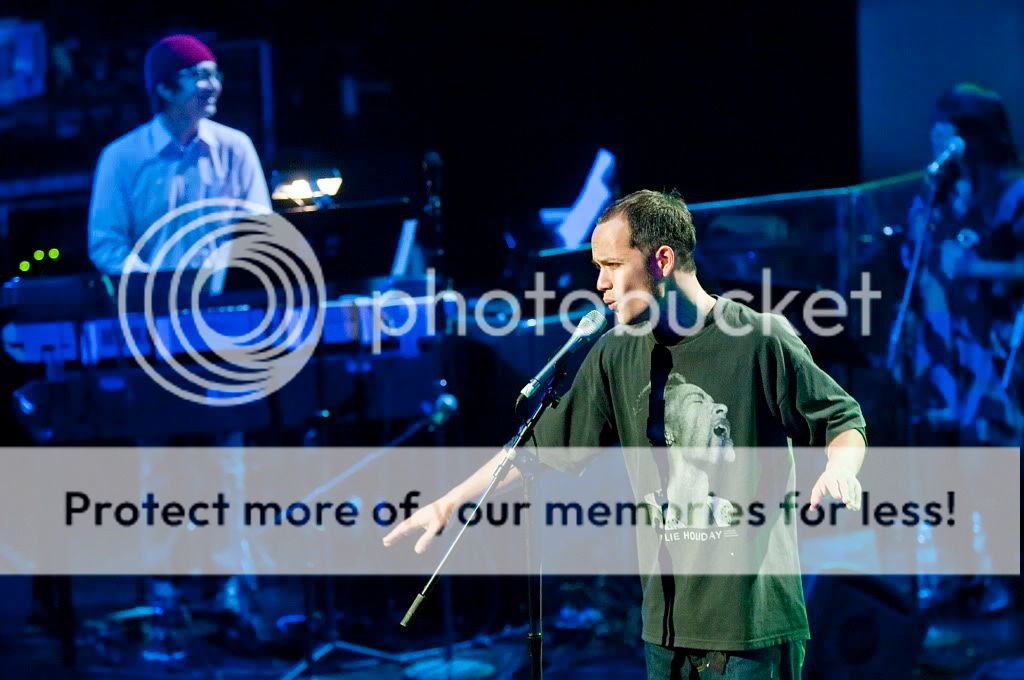
Global Fest came back and represented itself as the best globally conscious music presentation in New York again this year. Although the extreme disapointment of Femi Kuti dropping out of the program definitely was felt the night of the concert, Kailash Kher and Kailasa filled the headliner void 100%.

For someone such as myself who isn't particularly into Indian music, I was totally enraptured by the energy of the performance as the ensemble filled the Grand Ballroom at Webster Hall with Baliwood delight and fervor.
Global Fest


Friday, January 2, 2009

Toubab Krewe @ SOB's Jan. 8th 2009

Toubab Krewe, a band out of Asheville, NC that fuses traditional West African musical styles with American Southern blues, is returning to SOB's this Thursday night. Having seen them live before, I know they can put on one hell of a show. Definitely come check them out if you like African music, or if you simply like to dance.

Toubab Krewe Myspace

Sunday, December 28, 2008

The Year in African Music


So everybody's doing it. I was asked along with my co-worker Tebukozza Babumba-Olatunji to do it. I did it. Here it is...my top ten African Albums of the year.

1. Congotronics 3-Kasai All-Stars

2. Africa to Appalachia-Jayme Stone and Mansa Sissoko
3. Day by Day-Femi Kuti
4. Many Things-Seun Kuti
5. Mandé Variations-Toumani Diabate
6. Asa-Asa
7. Dununya-Kakande
8. Warchild-Emmanuel Jal
9. Rebel Woman-Chiwoniso
10. Made in Dakar-Orchestra Baobab

Album Review: The Macrotones-Wayne Manor


Wayne Manor, the debut album from The Macrotones, an eleven-piece afrobeat band out of Boston, is tight display of funk and percussive aggression that shows a lot promise for the group. Certain songs attack and punch you in the face from start to finish while others slowly creep, ebb, and flow, much like some of their biggest influences, Budos Band, Fela Anikulapo Kuti and Afrika 70, and Antibalas.

Funky basslines and tight rhythm section lay down a tight groove over which the horns drive the action and melody of the song in place of a vocalist. While there are only three horns in the eleven piece band, Nate Leskovic on trombone, Andy Bergman on baritone sax, and Jason Buhl on tenor and soprano, make their presence felt with authority with a heavy, deep register.

The percussion section really takes the identity of the album's overall sound. Since The Macrotones don't have a vocalist, they have an elongated, open texture. The clave, shekere, congas, and trap drums fill in the gaps and give the album its lasting impression.

The Macrotones are part of a growing faction of afrobeat bands throughout the east coast. Inspired by Fela and his contemporary disciples, they take on the same challenge as their peers: to continue the legacy of afrobeat with their own sound.

The Macrotones

Wednesday, December 17, 2008

Red Hot Rio-BAM-December 5th, 2008


It was a night of beautiful music, dancing, and people from start to finish at the Brooklyn Academy of Music's Red Hot Rio where 16 of the best Brazilian artists in the world touched the stage both contemporary and classic. From bossa nova to samba soul, Jobim to Tropicalia, it was a celebration of Brazilian culture that had the entire BAM Howard Gilman Opera house dancing and going crazy.

The stage was absolutely filled to capacity with Brazilian musicians. Curumin, Ceu, Bebel Gilberto, Jose Gonzalez, and Otto, rotated singing in front of the superstar backing band of Joao Parahyba, Moreno, Domenico, Kassin, Stephane San Juan, Alberto Continentino, Money Mark, Janja Gomes, Ze Luis, Jorge Continentino, and Carlos Darci. Featuring trumpet, trombone, tenor sax, baritone sax, two guitars, bass, 3 percussionists, and 3 singers, the total sound throughout the night achieved beautiful and rich melodies and harmonies, that resonated throughout BAM's beautiful opera house and were accentuated by visual projections.

It started with Jose Gonzalez serenading the audience with his velvety voice. Then Curumin came on the mic and picked things up a notch. Ceu followed and enchanted the crowd with her beautiful voice. Bebel Gilberto came on next and the crowd got progressively warmer. Then Otto came out and got everybody jumping. Things calmed down for a bit, but then the Harlem Samba drum line walked down the center aisle and onstage making the entire audience get on their feet.

Saturday, November 15, 2008

Album Review: Curumin-Japanpopshow


Japanpopshow, the new album from Curumin out November 4th on Adrenaline Records, could be the best samba-funk album of the century. Hailing from Sao Paulo, Brasil, Curumin embraces the many sounds to which he has been exposed to create an eclectic, consistently funky sound. Hip-hop, reggae, bossa nova, funk, and rock are all abundantly prominent throughout the album with certain songs featuring one sound more than another.

Curumin has been making music from a young age. He started his first band at 8 and was gigging regularly as a drummer in clubs across Sao Paulo at 14. At 16 he learned to play keyboards. Eventually he enrolled in music school and formed his first band, Zomba, which focused on Brasilian classic funk with dj accompaniment.


Chief Xcel of Blackalicious heard Curumin's last record, Achados e Perdidos, while touring in Brasil and brought him into Quannum Projects. Japanpopshow is the result. This album has one of most inventive, funky sounds of any I've heard this year. Curumin's playing at BAM December 4th; if you like funky, original music, check it out.

curumin myspace


Sunday, November 9, 2008

Album Review: Day by Day by Femi Kuti


Day By Day, the first studio album by Femi Kuti in seven years out November 18th on Downtown Records, re-established the prince of Afrobeat as a voice in the contemporary Afrobeat community. His trademark punchy horn lines and passionate vocals represent Femi's style having grown but not changed significantly. He still has his own style, his own sound, and his own message, different from his father Fela and brother Seun.

As the son of Fela Anikulapo Kuti, Afrobeat pioneer, African musical icon, and international protest figure, Femi played in his legendary father's band, Egypt 80, from a young age. He later broke away from Egypt 80 to start his own band, Positive Force, which played at The Shrine, Fela's home club in Lagos, Nigeria, one night a week. Femi has long displayed his father's passion for social justice and political action, but has differed from Fela on many fronts including his religious views and AIDS.


A few of the tracks on Day by Day are studio versions of songs performed on Africa Shrine, Femi's live album and Concert DVD such as "Oyimbo" and "One Two". Almost every song on the album has a strong political message like "Tell Me" and "Demo Crazy". Several of the tracks have a soft, jazzy feel at times such as "Tension Grip Africa" and "Untitled". Using the organ, guitar, trumpet, and various percussion instruments, Femi creates a soft backdrop against which the powerful horn section of Positive Force clashes.

"Do You Know?", a track that starts off with a funky bass line and Femi asking, "Do you know Miles Davis? Do you know John Coltrane? Dizzy Gilespie? Duke Ellington? Do you know Billy Holliday?" has a particularly funky groove. The guitar and organ parts are emphasized in a sly, scratchy manner in the early part of the song before the horn section comes in as a whole and then solos. Femi has been honing his keyboard skills for the past several years. His progress is evident on this track as the funky jazz vibe furnished by the keys and guitar parts is especially accentuated.


Some of the tracks are studio versions of songs performed on Africa Shrine, Femi's live album and Concert DVD such as "Oyimbo" and "One Two". Almost every song on the album has a strong political message like "Tell Me" and "Demo Crazy".

When younger brother Seun released his album Many Things earlier this year, a lot of people in the music community were ready to forget about Femi. People were ready to ordain Seun as the leader of the next generation of Afrobeat. Seun and Femi are very different and Day by Day is a clear example why. Seun, playing with Egypt 80, is picking up where his father left off, playing the same style and representing Fela's legacy. Femi has never been concerned with being the next Fela. Postivie Force and Egypt 80 co-existed for several years before Fela's death. Femi has always had his own style and sound, and Day by Day is a continuation of Femi's legacy of originality.

Femi Kuti Myspace


Thursday, November 6, 2008

The Budos Band Returns to SOB's-11.13.08


The Budos Band, a tight ass band out of Staten Island with a sound that's too funky for words is coming to SOB's next Thursday night. They mix Afrobeat, Soul, Funk, Ethiopian Jazz, and Rock to create a sound that's downright danceably funky with an attitude. Their music has been featured in movies, commercials and NFL films. It's the type of music you imagine playing when a bad-ass Latin mob boss walks into a crowded room and everyone makes room for them. They're on Daptones Records and part of the Brooklyn/NY funk scene that includes Antibalas, Dap Kings, and Chin Chin. They know how to bring the funk hardcore. Definitely a show worth checking out...

Wednesday, October 29, 2008

Thursday, September 18, 2008

Album Review: A Filial-$1.99


What do you get when you take the aggressive, tough mentality of Rio de Janeiro, the rhythm, flavor, and style of Brazilian samba, and the dance-floor shaking, hard-driving sensibility of American hip-hop? A Filial, Rio’s homegrown hip-hop posse that celebrates Brazilian culture while fusing it with hip-hop to incorporate it into a mainstream sound. Their first American full-length album, $1.99, is set to hit record stores nationwide December 15, 2008 on Verge Records.

Fifties bossa nova mixed samba with jazz, sixties tropicália mixed samba with rock, and A Filial mixes Brazilian roots music and other world influences with hip hop. On $1,99, with the group’s percussionist Rodrigo Pacato, A Filial explores the unmistakable rhythms and harmonies of Northeastern Brazil and the new spirit of Rio’s old samba spots.


Rapping in English as well as Portuguese, A Filial simultaneously is recognizable and foreign to the average American hip-hop fan. Their beats draw from American influences like the Beastie Boys and NWA, as well as Brazilian macaratu. They mix the two worlds of sound perfectly to create a soundscape that’s delightfully danceable and downright funky.


A Filial came out of Rio’s skateboarding scene and a hip hop circle known as the Hemp Family. “Our first tape was made using a Playstation, a karaoke set, a $10 mic, a toy that made music, and a used cassette,” founding MC Edu Lopes recalls. “We wanted to develop a hip hop sound that was more regionally based.” The following year a track was licensed to the skateboard brand Agacê for their “Todos Ouvidos” or “All Heard” compilation.


Now A Filial is releasing their first album, growing in popularity internationally, and growing together as a group. Their sound incorporates influences and styles from all over the world, so as they grow and travel to new places, expect their sound to continue to grow as well.


A Filial Myspace


Thursday, September 11, 2008

Album Review: Jayme Stone and Mansa Sissoko-Africa to Appalachia

Jayme Stone and Mansa Sissoko's new album, Africa to Appalachia released September 9th by JaymeStone.com, is a beautiful display of uniquely original composition that bridges continental gaps to speak the universal language of music. Jayme Stone, an award winning Canadian banjo player, and Mansa Sissoko, a griot kora master and vocalist, collaborate to create a heterogeneous yet familial mix of sounds that achieves a deep beauty and character.

Africa to Appalachia spans continents to create a sound all its own. Featuring African instruments like the kora and ngoni alongside the banjo, fiddle, and guitar, the ensemble finds an extremely comfortable common denominator and explores the possibilities therein. Mansa Sissoko's African vocals dip and glide much like bluegrass fiddler Casey Dreissen's solos, and the banjo blends perfectly with the kora to provide a seamless harmony. The polyrhythms, syncopation and bended pitches that define bluegrass all come from their African heritage, so it's no real surprise the two musical cultures speak the same language so effortlessly.

Many people think of the internet or phonographic recording devices as the means of globalization's effect on music cultures, but the Trans-Atlantic Slave Trade predates them both. The banjo is a descendant of West African instruments like the ngoni, akonting, and xalam. It was first played by African Slaves in the American South and Appalachia. The genres in which the banjo has traditionally thrived, bluegrass, early jazz, and especially the minstrel shows of the 19th century, all trace part of their lineage back to Africa as well.


Jayme Stone, who has employed an expansive musical worldview throughout his career, traveled to Mali, West Africa to explore the roots of his instrument in 2007. He traveled the country and studied with African string masters Toumani Diabate, Bassekou Kouyate, and of course, Mansa Sissoko. It was in Sissoko that he found a partner with which to collaborate. The two used the universal language of music to connect and get to know each other's history, "With little common language between us, we turned to music for communication," Stone reflects. "This tangible heart-to-heart connection was there immediately and I knew that he was the perfect collaborator for the project."


Sissoko descends from a revered line of griots, or family line of musicians, historians, and dispute settlers, that date back hundreds of years to the Mande Empire. Griots play a special role in African culture, similar to the one musicians play in American culture. "The griot is someone who is there to play the role of blood in the society, for the society to live," says Sissoko, "He gives life to the society, musically, using carefully chosen words."


Jayme Stone and Mansa Sissoko have given the world a gift by simultaneously creating a beautiful collection of music and giving testament to music's ability to bridge gaps, facilitate cultural dialogue, and bring people together. This album is a continuation of the cross-cultural exchange that was started in the 15th century. It was made possible by other musical works that have explored the history of African-American music and it will inspire others in the future. They'll be performing at Drom in the East Village on October 9th. Judging by their album, their live show should be even more captivating, so definitely check them out.

Jayme Stone Myspace

Thursday, September 4, 2008

Burning Spear Interview

Burning Spear is a music industry legend. He released his first album thirty-five years ago after Bob Marley discovered him in a field and introduced him to Studio One. He's since released fifty-one records, starred in a feature film, been nominated for eleven grammies, and won one. He's touring the US in support of his latest album, Jah is Real out August 17th on Burning Music Productions. I had the privilege of sitting down with the Spear before his concert last weekend at Irving Plaza.

The Afrobeat Blog: First of all, at 63 you do more than most people in their 20's. In the past year you've traveled to Africa, released an album on your own record label, where do you get your energy from?

Burning Spear: It varies, my energy is coming from the sun, my energy's coming from my mind, my heart, I try to focus. My energy's coming from all different directions.

The Afrobeat Blog: What was it like working with Bootsy Collins on your latest album?

Burning Spear: Working with Bootsy was very unique. I decided to do something different by bringing in Bootsy and Bernie. I did something on my album I never did before. I did a different thing changing up the instruments.

The Afrobeat Blog: Rockers is one of my favorite all-time films. How would you compare your story to that of Horsemouth from Rockers by taking on the record industry by yourself to change things for the better from the musicians' perspective?

Burning Spear: There's a lot of things that I can do today, and a lot of things I've done in earlier times, and those things come back to be a part of the mixture of what's going on today. There is a lot of improvement, I'm doing a lot of things for myself, I'm producing myself, I'm booking myself, I'm running my own business, I'm running my own label, Jah is Real is going to be my third release on my label, so there's a lot of difference and a lot of improvement.

The Afrobeat Blog: Do you plan on slowing up anytime soon? Another four, five albums? Do you plan on going as long as you can?

Burning Spear: I will always try to go to the studio and keep doing it as long as I can. Touring, I'll retire from touring, but I will use my discretion like when I'll do a show here and there, and that's about it.

The Afrobeat Blog: You've traveled all over the world playing music, most recently you were in Kenya, do you plan on going back to Africa again anytime soon?

Burning Spear: When the time is right. I went to Kenya in 2007, and it was very outstanding. I brought the people together for two to three hours, and everyone was enjoying themselves. The performance was properly supported by the people from Kenya, and when the time is right I will go back to Kenya or any other place in Africa when the time is right.

The Afrobeat Blog: Why do you think your music resonated so deeply with the people of Kenya on your trip?

Burning Spear: I think the people needed something like that at least for a couple of hours. Who knows what takes place after I leave, but at least when I was there everything was calm and the people came together as one people.

Burning Spear.net

Wednesday, September 3, 2008

Fela!-Show Review


Fela!, an offbroadway musical that runs through the end of September at 37 Arts Theater, celebrates the life of Fela Anikulapo Kuti by bringing his music to life with captivating choreography, telling his story, and paying tribute to the legacy of his international protest voice. An ensemble cast of twenty-six actors, dancers, and musicians uses music, dance, video and still projections to tell stories from Fela's life. Sahr Ngaujah, who starred in the title role, has all of Fela's charisma and stage presence and then some. The creative choreography and set design paint a vivid picture of who Fela was and how he became the man we know today.

Bill T. Jones, a Tony award winning director and choreographer, Rikki Stein, Fela's former manager and the executor of his estate, and playwright Jim Lewis first met with Aaron Johnson and Victor Axelrod of Antibalas in the summer of 2006 to discuss their idea for the production. Later that year, Antibalas had a one day work session with the producers of the show and some dancers at which point they decided there was potential to pursue a show.


What they've come up with is an inventive, vibrant production that pays tribute to Fela's life by using his music to tell his story. The theater is setup to replicate The Shrine, Fela's home base nightclub in Lagos, Nigeria, with Antibalas taking the place of Afrika 70. When the show started, and Fela welcomed the audience to the Shrine, I thought to myself, "If everyone in the audience was dancing and ganja smoke filled the air, this would be just like the Shrine." Both things happened during the first act.

The story unfolds as musical numbers alternate with monologues and video projections to recap events from Fela's youth, adulthood and rise to fame. Major events from Fela's life up until the death of his mother are portrayed including Fela's college years in London, his trip to America and first marriage, the creation of his first band Koola Lobitos, one of his first encounters with the law (famously known as the "Expensive Shit" episode), his joint marriage of twenty-seven wives, and the attack on Kalakuta Republic.

Bill T. Jones is extremely successful in both paying homage to an internationally revered musical icon as well as introducing Fela to a new generation of people through this play. He introduces the different elements of Afrobeat by recounting the history of Fela's exposure to different styles of music in Africa, London, and the United States. The musical arrangements include the music of Fela's youth, highlife (as represented by an E. T. Mensah song--Medzi Medzi), big-band jazz (represented by Frank Sinatra), funk (James Brown), and cuban salsa. The rest of the show's music consists of Fela's most popular songs he recorded with Afrika 70 in the first half of his career including among others I.T.T., Water Get No Enemy, Shuffering and Smiling, Zombie, Sorrow Tears and Blood, and Coffin for Head of State.

Jones pays a special tribute to Funmilayo Ransome-Kuti, Fela's mother from whom he inherited much of his rebellious spirit. She was an internationally recognized women's' rights activist who was the first African woman to drive a car and travel to China. She is portrayed as an angelic figure in the play and her death at the hands of the Nigerian Army is the pinnacle event of the production.

To include the complexity and complete scope of Fela's life and music would have taken much longer than a couple hours, so obviously major elements of Fela's life and musical repertoire were omitted. Major characters in his life such as his spiritual advisor Professor Hindu and his brother Beko did not appear at all. Much of the dancing performed by the female dancers, although extremely captivating and majestic, was not reminiscent of that which one would have seen at the Shrine in Lagos or at any other of Fela's performances around the world.

If you are a disciple of Fela and an avid Afrobeat fan, or you've never heard of him before and simply love good music and dancing, you'll love this show. Bill T. Jones and Antibalas do justice to the legacy of Fela Anikulapo Kuti, one of the most dynamically prolific protest figures and musical icons in the history of the world, by celebrating his music and political message in a modern context. In a time where America could be on the verge of electing its first Black President, this play provides historical context to the international significance of Fela's legacy and its effect on contemporary culture.

Fela!

Friday, August 22, 2008

Album Review: Kasai Allstars-Congotronics 3

"In the 7th Moon, the Chief Turned Into a Swimming Fish and Ate the Head of his Enemy by Magic," the debut full-length album from Kasai All-Stars, is an unabashedly raw, aggressive explosion of sound, soul and color. Out July 15, 2008 on Crammed Discs Records as the third edition of the Congotronics series, its deep trances and winding rhythms tap into the primal essence of why music is a universal language.

The Kasai Allstars is a collective of twenty-five musicians from six bands and five tribes – the Luba, Sonye, Lulua, Tetela and Luntu – all of whom originally come from the Kasai region in the center of the Congo. Their music is drawn directly from ritual festive music played before the arrival of European colonizers and missionaries who found the highly erotic dances and pagan trance ceremonies satanic and unholy. The traditional musical practices were eventually banned pushing them to the brink of extinction. Even the actual traditional instruments all but disappeared.

Today the Kasai Allstars are reviving the practices once shunned by their colonial oppressors by fusing several different styles and cultures into a new "Allstar" sound. Using acoustic instruments with electric guitars, distortion-laden thumb pianos (with DIY amplification) and soulful vocals, they have a sound unlike any other. Their ability to layer repetitive patterns and progressions builds a rich texture to create a powerfully rich composition. The album is almost underproduced, emphasizing the raw, uninhibited nature of the music. After appearing on Congotronics 2, the Kasai Allstars are making a very strong first impression on the international music scene with their first full-length release.

Kasai Allstars


Wednesday, August 20, 2008

Album Review: Burning Spear-Jah is Real

I don't know what I'll be doing when I'm 63, but it probably won't be releasing a full-length album on my own record label and traveling to Africa as a cultural ambassador for peace. For Burning Spear, whose new album Jah is Real came out August 17th on Burning Spear Records, that's icing on the cake of a legendary career in which he's released fifty-one records, been nominated for eleven grammies, starred in a feature film, and toured the world several times over.

Jah is Real is proof Burning Spear is as dedicated to Marcus Garvey's message as he was the day he first walked into Studio One. Tracks like One Africa, Grandfather, and Stick to the Plan all emphasize Marucs Garvey's Pan-African message. Run for Your Life advocates self-reliance, recounting the story of the founding of Burning Spear records. Bootsy Collins plays bass on a few tracks, injecting some extra funk into the proceedings, and Brian Hardgroove of Public Enemy laid down a funky drum and bass remix of Step It to close out the album.


Spear doesn't just advocate African Unity in his music, he backs up his words with his actions. At the request of the United Nations, he traveled to Kenya, the African nation from which he took his name, after a rigged election caused widespread violence earlier this year. He came as an ambassador of peace and was welcomed as a long-lost king as he performed for 65,000 people in Nairobi and brought them together peacefully as Africans, something Kenya badly needed in the post-election violent times.


The Spear kicks off a tour of the United States and Canada at the Irving Plaza on August 31st . He'll be playing eleven shows in ten cities throughout the month of September. If you love reggae, buy a copy of Jah is Real or catch one of his live shows. Burning Spear is as authentic a reggae legend as there is living today, and he isn't showing any signs of slowing up.

burningspear.net

Thursday, August 14, 2008

Album Review: Famoro Dioubate's Kakande-Dununya


Dununya, the new album by griot balafon master Famoro Dioubate and Kakande, his 9-piece ensemble, is a testament to West African music's ability to stand the test of time and evolve. Kakande seamlessly combines traditional African and contemporary Western instruments and influences to foster a fresh, original sound.

Kakande is guided by the eight-hundred year old tradition from which Famoro Dioubate descends. He is a griot or jeli--a family line of musicians, historians, and dispute settlers--and his grandfather, El Hadj Djeli Sory Kouyate, is one of the most revered balafon players in West African history. Dioubate was mentored by his grandfather from an early age and performed with the Guinean National Ensemble by his grandather's side. The depth and profound nature of Kakande's sound pays homage to the traditions Dioubate brings to the ensemble.

Kakande employs a diverse instrumentation with the cello and electric guitar featured prominently along with the balafon, djembe, and flute. Dununya exhibits exquisite range, going from slow, deep, relaxing grooves to more upbeat danceable rhythms from track to track. Dioubate's arrangements push the music of his ancestors into the next generation incorporating western instruments and influences into the ensemble while simultaneously maintaining an authentic African sound.

One track from the album that perfectly exemplifies Kakande's evolved sound is Souaresi. The cello, flute and saxophone blend perfectly with the balafon and voices to foster beautifully deep, melodic lines and pitches. The cello especially adds an extra layer of texture that brings an elegant western class to accompany the majestic African sound. It contrasts beautifully with the polyrhythmic arrangement and adds heavier bass to the lower register to round out the total sound. Missia Saran Dioubate's vocal lines are especially beautiful as her voice soars over the flowing backdrop the ensemble provides.

Kakande's Dununya is eleven tracks of beautiful music that will make you dance, relax, invigorate your soul, and educate you about the traditions of West Africa. Famoro Dioubate is part of a recent wave of African musicians in New York City who in collaborating with different artists, broadening their musical horizons, and celebrating African music's ability to evolve and grow to take new shapes and forms, are fostering a new African sound, one that celebrates Africa's musical history while embracing its future.

Kakande

Chicago Afrobeat Project at Drom-August 9, 2008


The Chicago Afrobeat project lit up the stage at Drom Saturday night when they brought their midwest afroswing to the east village club on the back end of nationwide tour that took them west to California and Colorado before coming to the east coast. The seven-piece ensemble was joined onstage by two dancers from the Muntu Dance Theater of Chicago during the second set at which point the show went from a dope band laying down some beats to a spectacular audio-visual presentation that doesn't come around very often.

The Chicago Afrobeat Project got their start playing parties in the Chicago loft scene and has been touring the country spreading their politically charged Afrobeat message for the last six years. Their sound encompasses a wide range of influences and styles including jazz, funk, rock, afro-cuban, and West African highlife and juju. Perhaps the most prevalent sound in their arsenal is the soulful jazz element supplied by Kevin Ford on Fender Rhodes piano and David Glines on guitar. They both emphasize a light, jazzy style that cuts across the heavy percussion and bass arrangement and provides a perfect backdrop over which the horns glide.


(A) Move to Silent Unrest, the band's second full-length album, came out last year and exhibits the same range and variety as their live show; they have the ability to do deep, slower, jazzy songs, and then switch up the pace with an aggressive, faster, more hard-driving cut. Their rhythm section composed of Thad Landis on bass, George Jones on congas and percussion, and Marshall Greenhouse on trap drums, know how to move a party. Greenhouse especially can drum himself into a frenzy, sometimes bearing a resemblance to Animal from the Muppet Show.


The Chicago Afrobeat Project have an unparalleled live performance that features beautiful African dancers, polyrhythmic percussion sessions, and nasty soloists. They make it to the east coast a couple times a year, so definitely check them out when you get the chance. I highly recommend picking up their album in the meantime, especially if you're looking for something to play at your next dance party.

chicagoafrobeatproject.com

chicago afrobeat myspace

Wednesday, August 6, 2008

Album Review: One Day as a Lion


One Day as a lion is Jon Theodore and Zach de la Rocha saying we don't need anything but a keyboard, drums and a microphone to kick the shit out of you. They waste no time in doing so from start to finish on their 5-song EP out July 22nd on Anti Records.

One Day as a Lion is an ongoing collaboration between De la Rocha and Theodore in which they create a simplified, harsh sound that simultaneously showcase their voices. Theodore's unabashedly aggressive style meshes perfectly with De la Rocha's attacking vocal approach. Their arrangement sets the stage for a rhythmic and lyrical attack that holds no punches and brings it raw.

Zach de la Rocha is a better rapper than singer, but he still brings the rage when he uses his singing voice on tracks like Last Letter and If you fear Dying. By singing instead of rapping, he adds an elongated sustained element that contrasts Theodore's fanatically syncopated drum lines.

onedayasalion.com

myspace.com/onedayasalion

Rock the Bells NYC-August 3, 2008


The New York City installment of the International Rock the Bells hip-hop tour on Sunday may have been the best hip-hop show in history. In a night where Dead Prez, De la Soul, Biz Markie, Afrika Bambaataa, the Pharcyde, Raekwon, Ghostface, Scratch, Supernatural, Mos Def, Talib Kweli, Pharoahe Monch, Method Man, Redman, Slick Rick, EPMD, Keith Murray, Nas, Jay-Z and all four original members of A Tribe Called Quest with Busta Rhymes hit the stage, the 15,000 hip-hop fans who made it to the Jones Beach theater witnessed an historic event.

The doors opened at 12 noon. After I took three trains, one bus, made it through security and got in to the theater around two, Dead Prez had the crowd jumping to their anti-establishment message giving shout-outs to Crown Heights, Brooklyn along the way. Immortal Technique followed and continued the anti-government vibe.

De la Soul got on next and took things to the next level. They've been known to get a few crowds moving since their debut 21 years ago, and they were joined on stage by old school cats like Dres from Black Sheep who performed The Choice is Yours, Q-tip to do Buddy, and Biz Markie who brought the house down with, of course, You Got What I Need.

Next up was the Pharcyde, who before Rock the Bells hadn't played a show together in 11 years. Raekwon and Ghostface followed and had the sold-out theater chanting Wu-Tang. They were joined on stage by Cappadonna and played Wu classics like C.R.E.A.M., Victory, and a
tribute to the late O.D.B., I Like it Raw. Scratch and Supernatural came out after and Supernat kicked a freestyle that incorporated any object the crowd could hand him or reference in any way including t-shirts, cameras, jewelry, blunts, lighters, and a pair of underwear.

Mos Def came out next just as the Sun dipped behind the back of the stadium donning a kaleidoscopic basketball uniform repping Bed-Stuy. He did a few songs from the New Danger before being joined on-stage by Talib Kweli at which point they kicked it back to Black Star
performing songs like Brown Skin Lady, Definition, Respiration, and K.O.S. Determination. The reunited duo was joined onstage by Pharoahe Monch when the dj dropped Simon Says, and the crowd went nuts.

Method Man and Redman followed Mos Def and seriously got the crowd jumping. They climbed on top of the speakers, jumped into the crowd, stopped the beat to hit a blunt, and did anything else they could think of to incite the crowd. Guest MC's during their set included Slick Rick, who spit the first few bars of Lodi Dodi, Raekwon, EPMD, and Keith Murray who did his verse from the Def Squad version of Rapper's Delight.

Nas came out next and played possibly the best set of the show. He had a 6 piece band as well as Dj Green Lantern on stage with him. He kicked it back to Illmatic and brought it back to his new album making all the stops in between. The entire concert just about stopped in its tracks when midway through his Nas' set Jay-Z came onstage with a Yankees hat tucked low over his eyes. Nas put on his Mets hat, and the two rival MC's rocked a brief song before Jigga ran back off.

Finally, Q-Tip came onstage around 11 to close out the legendary night. He played his new single and other solo hits with Mos Def before all four original members of A Tribe Called Quest, Phife Dawg, Jarobi, Q-Tip, and Ali Shaheed Muhammad, came onstage together in New York City for the first time in ten years. They played all the old-school joints off of The Low End Theory and Midnight Marauders, but the highlight of the concert was when Busta Rhymes came onstage during Scenario. In a night where hip-hop history was taught while simultaneously celebrating new school stars, Rock the Bells lived up to its billing as a world-class hip-hop forum, and then some.

Friday, August 1, 2008

Fu-Arkist-Ra and Sweet Plantains String Quartet at Joe's Pub-July 27, 2008


While hip-hop and afrobeat aren't generally associated with cellos and violins, that didn't stop the Sweet Plantains String Quartet and Amayo’s Fu-Arkist-Ra from putting on a show packed to the brim with soul, funk and flavor Sunday night at Joe's Pub. Both groups have a reputation for bending genres and originality—Fu-Arkist-fuses afrobeat with free jazz, funk, dub, and classical music incorporating an inventive array of instrumentation and styles, and Sweet Plantain takes a contemporary approach to classical music bridging the gap between hip-hop, jazz, and latin improvisational styles with a classical repertoire. Needless to say, it was unique night.

The Sweet Plantain String Quartet started the night off. Composed of four classically trained musician—violinists Eddie Venegas and Romulo Benavides from Venezuela, Cellist David Gotay from the Bronx, and Violist Orlando Wells from New Jersey—they’re not your average string quartet. The group's mission is to give voice to a contemporary, urban, Latino sound, and much of the group's repertoire is rooted in improvisation. Throughout the course of a set they go from funky to fancy, graceful to gruff. Musically, they were all over the map: they played Afroblue by John Coltrane, a classical rendition of Excursions by A Tribe Called Quest, and Jenny’s Blues, a piece that had a New Orleans blues feel supplied by a strong back beat, Eddie Venegas’ trombone solo, and Romulo Benvides playing a staccato violin to mimic a banjo.

The Sweet Plantains transitioned out of their set with a cover of Fela Anikulapo Kuti’s Water Get no Enemy. Amayo joined the quartet on stage, and the music didn’t stop as all nine members of the Fu-Arkist-Ra joined them onstage and fell into the groove. I don’t know what was more impressive, the seamlessness with which the two ensembles merged their sounds, or their ability to successfully navigate and share the stage.

Everything about the Fu-Arkist-Ra, is unique, but their instrumentation is definitely something you’ll rarely see: electric keyboard, three vocalists, chekere, cello, flute, trap drums, congas, bass, guitar, and an 8-foot Nigerian Ife drum. Their interesting mix of instruments creates an original, unique sound on its own, but when the Sweet Plantains Strings joined them onstage, another layer was added to really make something special. The ensemble laid down a deep winding groove—a churning bass line and multi-layered percussions combined with off beat cello and keyboard lines. It was like an afrobeat score to a scary movie.

Overall, it was one of the more unique shows to which I’ve been.
The rare mixture of musical elements fostered a sound and fusion that doesn’t come around very often. Every time I’ve seen Amayo’s Fu-Arkist-Ra, I always walk away with the same lasting impression of an energy-packed show that keeps the crowd engaged from start to finish. I was especially impressed by the Sweet Plantains as well. Their ingenuity in arrangement and propensity for fusing classical and contemporary genres is unmatched. Both groups are at the forefront of creating new soundscapes and pushing the limits of contemporary music.


fuarkistra.com sweetplantain.com