Wednesday, June 22, 2011

Interview with Seun Anikulapo Kuti

Seun Anikulapo Kuti is one of the most dynamic young musicians in the world. Youngest son of Fela Anikulapo Kuti, founder of afrobeat and African musical icon, Seun released his second full-length album, From Africa With Fury: Rise, yesterday on Knitting Factory Records. He's currently touring Europe and is about to cross the Atlantic for a string of dates all over North America, including the Grassroots Festival the third week in July. I had the honor of speaking with Seun on music, politics, working with Brian Eno, and more:

Seun Kuti - You can run by djdemonangel4

Marc Gabriel Amigone: I read you set out to do something different with your new album, a departure from your first. When I listen to the new album I feel like the horn lines are more complex and aggressive. The album as a whole is a lot more aggressive. What did you focus on to achieve your goal of doing something different?

Seun Kuti: Well, when I set out to do something different I wanted to improve on the last album. I had in the back of my mind when I was working on the album, without leaving afrobeat I have to make my music as different from the last album as possible. While still making an improvement without leaving the genre, that was difficult, you know, staying in the genre while still improving it. But I guess I was able to do that, I was able to complete that.

MGA: So did you focus on anything specific like the horn lines or the rhythms or something?

SK: Yea, from the horn lines to the music, to the rhythm section, I was more confident. With my first album, I didn't want to be too brash or too soft, you know, a lot of things go through your mind when it's the first time. It's just like having sex the first time, you don't know how to do it, you really don't know what's up. About the second time , you're more confident than the first time.

MGA: Right, right you have experience from which you can draw the second time around.

SK: Exactly, so that's how it went with the new album.

MGA: How did your relationship with Brian Eno come about? Who contacted who?

SK: For this album I contacted him. I told him about it. For me I like him because he invited me to come with the band to play a show, I was actually surprised he knew my music, that was two years ago.

MGA: What was it like working with him?

SK: Brian is one of those people who will teach you about you. He'll show you things you didn't even know, and if you're really honest with yourself he's telling you the truth, you'll be like yea man you're right.

MGA: To me the song Rise captures the essence of what you're trying to say with this album. When you talk about companies like Haliburton and Monsanto and you're asking people to rise up agains their power. Who are you targeting specifically with that message? Is that for Nigerians, Americans, everyone in the world?

SK: No, no this is Nigeria! I'm talking about Africa, Haliburton and Monsanto in Africa, not Haliburton and Monsanto in America, no, this is in Africa. Dick Cheney has been indicted in my country like three months ago for everything, for a deal he tried to run under the table, it was an 18 million dollar scandal. Haliburton bribed people, they paid our officials to take bribes. Contracts, real things you know?

MGA: So do you think many people in Nigeria are aware of the role Multi-National companies play in their lives as well as the global economy?

SK: Yea they know, but they are led to believe that without these international companies, they cannot have jobs, we cannot do anything on our own. We are made to believe without these countries Africa cannot develop. This is what is ruining Africa.

MGA: Who do you think is brainwashing them to think that? Is the government playing a role along with the companies?

SK: Of course, they give them all these kickbacks, they come to Africa and they donate four hundred million dollars to Nigeria. They're not giving this money to the people, the government officials take this money and steal it. They don't want Africa to develop. In Africa, Nigeria, wherever they will never create an operating system for a computer that we can use in Africa and buy and make money for Africa, whichever way Microsoft believes, Africa needs to develop as a manufacturer. Do you understand what I mean?

MGA: Yes I do.

SK: This is what is happening, it's not just Haliburton and Monsanto. All the multinationals are in Africa.

MGA: Right, it's a bigger problem than just those two companies.

SK: You don't come and make all kinds of donations in Africa never to the people, always to the government officials to help the people, but they never give the money to the people, they put it in their pocket.

MGA: Right. Which is something that's been going on for decades in Nigeria.

SK: That's right, yea.

MGA: What did you think about the way the most recent elections were carried out in Nigeria?

SK: All these politicians have dragged the ruling politicians into court. The elections were not free and fair.

MGA: Would you ever consider running for political office in Nigeria?

SK: Yes of course, it's one of my big plans for the future. When we get to that I will call you again.

MGA: Ok, cool. What are your thoughts on the way the West is choosing to intervene or not intervene in the uprisings across the middle east and North Africa?

SK: I do not support any intervention in Africa by Europe and America, political, economical, social, any kind of intervention. We should be able to manage all of our own situations ourselves. What the West is doing in Libya today is a big shame. What's going on in Libya is wrong.

MGA: Well, what about the situation in the Ivory Coast? The final resolution to that came after the French troops extricated the president from his palace, right?

SK: What they are teaching Africans is that only through force can you achieve any kind of progress. When a big country like France brings their military to commit a coup, because what happened in the Ivory Coast was a coup. When the military goes and kicks out the president, that's a coup. Whether they call it a good coup, it's still a coup. This is what they teach us. They come here, and the only way they get anything is by power. We will come and remove this guy. Why? So whenever anyone else wants to kick this new guy out, they will use force because that's the only option we've been taught here in Africa to use.

MGA: Right so that's the model that Africans now use for their own power struggles in the future, and that's dangerous.

SK: Well in Africa using force is easy. Why aren't they going to bomb North Korea, man? If they're worried about Gaddafi killing his own people, why don't they bomb North Korea? The people of North Korea are not protected. How about Syria, Yemen, Bahrain? They're killing their own people there too. Why isn't anyone doing anything there? Because the governments there are submitting to the West, you know?

MGA: So do you think the West should intervene in Bahrain and Syria and all of those other countries?

SK: No, they shouldn't because it's none of their business. That is none of their business as well.

MGA: So what do you propose should happen?

SK: If they intervene in Libya, they should be in Syria, Bahrain and Yemen as well. Do you understand what I mean?

MGA: I don't really. It seems like you're advocating they don't intervene but if they are going to intervene, they should intervene everywhere.

SK: Exactly, the only way they can justify their intervention is to be everywhere. So if they're not everywhere and only in Libya, that makes me ask, why Libya? Do the people of Libya deserve freedom more than the people of Syria? Do the people of Libya deserve democracy more than the people of Bahrain? I don't understand that. They are in Libya for the oil. Nobody should tell you otherwise because I know the west, France, US, Britain, they were all in the United Nations discussing human rights in Africa. They were all in their pocket. They all went in to negotiate how BP can get in there to get some oil. Tony Blair went to Libya to do business. They released the Pan-Am bomber, The Lockerbie they released him so that they can get their oil.

MGA: I agree. Well let's get back to music for a little while. Are there any other musicians or bands playing afrobeat today that you listen to?

SK: Right now, I listen to a lot of reggae right now. I listen to a lot of reggae, I'm not a hip-hop fan anymore, so reggae is my thing right now. Hip-hop is boring.

MGA: Are there any African hip-hop artists you find inspiring?

SK: Just the way I don't think Americans can play afrobeat, I don't think Africans can play hip-hop. If you want to make hip-hop music, go out and make hip-hop music the way it's supposed to be made. If you want to make African music, make African music the way it's supposed to be made.

MGA: That's interesting. What did you think of the FELA! play on broadway and its effect on afrobeat's popularity globally?

SK: It was great for afrobeat. Everyone in the world loves something successful. I think it was successful. It increased the popularity of afrobeat in the US.

MGA: Is it true that you were offered the role of Fela in the play?

SK: Yes I was.

MGA: And you didn't want to do it.

SK: No I didn't want to do it because of my music career, you know? I would have to move to New York to rehearse, to tour with the group, and be there with them. I'd have to put my music on the side.

MGA: People are constantly comparing you to your father and other members of your family. What are some of the ways you feel you're different from your father the most?

SK: I was wondering when this question was going to come up. Well for me I don't try to be different from my dad because that's not my aim. I'm a musician of afrobeat music. I never try to enter into a competition with my dad. I only try to be a good afrobeat musician. We have a different personality too. I feel like your personality plays a big role in your music, it gives it that feeling of my identity which is different from my father's. My father's music has its own personality. I'm looking forward to a world where there are lots of afrobeat bands playing the music correctly with their own personality in the music.

MGA: Does it bother you that every interview you do someone asks you about Fela?

SK: No it doesn't bother me. I get used to it. He's my father, you know. I expect that. Actually, I look forward to it, I think when is this question going to come?

New Single from Superhuman Happiness

Check out Needles and Pins, the new single from one of my favorite bands, Superhuman Happiness, led by one of my favorite people, Stuart Bogie. You know Stuart from his work with Antibalas, FELA!, The Sway Machinery, TV on the Radio, and a whole bunch of other great music. If this is an introduction to Superhuman Happiness for you, let it be the beginning of a lasting relationship. This is a band on the rise with a unique sound, def check them out.


"Needles & Pins" Superhuman Happiness by Royal Potato Family

Wednesday, June 15, 2011

Lagos Disco Inferno @ Zebulon This Weekend

To all those interested in receiving a heavy dose of afro-funk in and around Brooklyn, NY, go to Zebulon this Saturday night to hear Frank Voodoo Funk Gossner kick out some serious jams. To those who are unable to make it to BK this weekend, check out his preview mix to tide you over.

Tuesday, June 7, 2011

101 Things to Do in Bongolia

Electric Cowbell Records is an independent record label based in Brooklyn, NY specializing in pressing the freshest new music to 45's. I first heard of Electric Cowbell when label founder Jim Thomson handed me a 45 while I was spinning at Southpaw last summer. "How'd you like a piece of vinyl?" he said as he reached across the turntables. "I'd love one," I responded. He handed me a copy of Think (Pensamiento) by Spanglish Fly backed with Let My People Bugalu and said, "That's what I thought." Not coincidentally, Superhuman Happiness was on the bill that night, the other Electric Cowbell 45 handed to me that night by Stuart Bogie.

"GMYL" | Superhuman Happiness by Calabro Music Media

Both bands are featured on 101 Things to Do in Bongolia, Electric Cowbell's first digital release compilation. Dozens of DJ's across NY could probably recount stories identical to mine. Electric Cowbell is the essence of a grassroots, guerrilla marketing, old-school indy record label. No corporate money to finance PR campaigns, fancy packaging or major distribution. They're an artist-run operation dedicated to putting out good music, plain and simple.

Bands featured on the comp include Bio Ritmo, Debo Band, CSC Funk Band, Amazing Ghost, and several more. This comp gives listeners a taste of some of the best music happening in NY today. It's like a snapshot of a musical family that stretches across genres and styles. Use it as an introduction and dig deeper into any and/or all of the bands that sound good to you. You won't be disappointed.

Tuesday, May 31, 2011

Interview with Blitz The Ambassador

Blitz The Ambassador is the epitome of a conscsious hip-hop artist. He describes himself as a combination of Public Enemy, Desmond Tutu and Fela Kuti. Originally from Accra, Ghana, he moved to Brooklyn after studying at Kent State University, and has quickly moved to the forefront of the class of hip-hop musicians hailing from the continent. Blitz manages to keep a foot in both worlds, maintaining a strong African identity while still bridging the gap with American audiences. His latest album, Native Sun, which features guest appearances from Les Nubians and Chuck D, is the latest in his ongoing ascent to the top of the hip-hop world. His short film with the same name is currently available online as well on the film festival circuit. I had the pleasure of speaking with Blitz several weeks ago upon his return from his European tour:

Blitz the Ambassador - Dear Africa ft. Les Nubians by embassymvmt

Free Track from Native Sun

Marc Gabriel Amigone: So you've been touring as of late over in Europe?

Blitz The Ambassador: Yea man I was in Europe for the past month or so mainly France, Germany, Switzerland, but yea man it was a great time getting around playing this music.

MGA: That's great, how was the reception over there?

Blitz: The reception's been awesome, I mean when you're playing music of any kind that people appreciate that's a huge deal for me, so I've been fortunate and lucky enough to be at a point in my career where people want to hear what I have to say so it's a good look.

MGA: Absolutely, was that your first time performing in Europe?

Blitz: No, I've been about three times, this is my forth, and every time I go it gets bigger and better. It's dope.

MGA: How would you compare your reception over there to your reception in the States?

Blitz: Obviously you're playing for people who don't live where hip-hop was born so there's always a greater appreciation, which is to be expected, you know? In America, and especially in New York, people have kind of seen it all. It's much harder to get them hyped about anything. In Europe they're just beginning to find out what hip-hop is so it's much more exciting to them especially with the live band feel, it's bigger and better.

MGA: What's the meaning of your name, Blitz The Ambassador?

Blitz: Well, first the Blitz part is really out of the style that I wanted to have. My style has always been fast-paced something that comes at you hard. That's kind of the name that after I evolved past the rapper and I realized my role in this game is much bigger than just rap I added the ambassador and that's quite obvious coming from Accra, Ghana. Not everybody's up on what's happening outside of America so I found myself in that position all the time having to kind of school people. And vice versa, back home I find myself being the liaison to what's happening outside of Ghana so I found it appropriate to name myself the ambassador putting the two of them together.

MGA: That leads me to my next question, you definitely have a foot in both words. You're an African representing the continent but you're also living in the Western-US world. Do you feel that gives you a unique perspective most people don't have?

Blitz: Absolutely man, more than a perspective it actually gives me an advantage because I'm able to have influences that most regular people don't due to my background of course. I have a new look at hip-hop that most people who grew up here don't. It's kind of like an outsider looking in. I've had a chance to scope it much wider than people who were born in it. When I first integrated here it wasn't much of an advantage because hip-hop was still in a place where it hadn't hit the stalemate where it is right now. As years have gone by, I'm realizing that's my biggest fortune, I'm able to bring something from a new perspective to hip-hop that doesn't exist currently.

MGA: Do you feel like people are opening up to more worldly sounds from different parts of the globe than they had before?

Blitz: Absolutely. It's quite obvious the reason why it is because we kind of hit a point in hip-hop where it's kind of plateaued you know? Things are not that exciting right now, so if there was ever a time where people would be curious, this is the point where they can be curious because there's something they're not up on and it's entertaining enough to be interested in.

MGA: Right and I feel like as a culture we've become more and more open to new things and cultures just because of the internet and all kinds of factors have opened people up to new ideas and things.

Blitz: You don't have to look past Barack Obama, that's the big example to me. A guy who's of African and American ancestry, half and half, ends up being the first black president. It's like the time where if anything international was going to be popular in America, this is the time.

MGA: Do you credit any other artists out there like K'Naan or Bajah that are leading the charge with you from the continent bridging the gap?

Blitz: Absolutely, man, these guys are all people that I know personally and between K'Naan, Bajah, Nneka, these are all people who have been on their grind for many years, and this thing is a movement. For me to make sense, K'Naan has to make sense, Bajah has to make sense, a lot of people have to make sense so it's important that we're all moving and striding, keeping this movement moving forward. I truly believe this is the next step, even if it's not African hip-hop, I believe it will be hip-hop with an international lean to it.

MGA: You can really hear the intentional consciousness in your music. You were talking about the IMF in one of your songs, have you ever heard another rapper reference the International Monetary Fund in one of their rhymes before?

Blitz: I mean, you know, I'm sure many people talk about these issues. These conglomerates exploit different parts of the world, not just the African continent. South Americans and other places, I'm sure if you look into Latin American rappers, the ones who have a message at least, you'll find this content. It's really about bringing this all together under one thing. That's really what this is all about. When I say a movement, I really mean that this thing has to end up congealing into one solid thing that people can put their heads around. That's the next step for us as rappers with international, global consciousness, working in conjunction with one another to fully make sure these subjects we're talking about aren't just a drop in the bucket but are part of a larger conversation people are having. I think it's an important time.

MGA: Right, I wouldn't necessarily call it a movement, but it's definitely a dynamic where the multinational corporations and the multinational organizations like the IMF and the World Bank are all working together on the same page to impose their will and it's up to us to join together to fight back against them.

Blitz: That's important stuff, man. They don't sleep, so why do we sleep?

MGA: Exactly.

Blitz: That's how I look at it.

MGA: There was one rhyme on your album, you liken yourself to a combination of Public Enemy, Fela Kuti and Desmond Tutu. I couldn't think of anyone else who would pick those three iconic images. Could you expand on that a little bit for me? What attributes from each would you say you encompass?

Blitz: Man, from Day One, Public Enemy has been the reason why I started rapping so if you want pure unadulterated hip-hop in its most raw form, you're talking PE. Fela Kuti is the other extreme, you know? He's another guy that's so unapologetic about his ideas while at the same time sonically brought the fire. And then linguistically, there's no better icon of the South African apartheid era besides of course Nelson Mandela, there's no one who's more able to speak on what's going on during those times. Linguistically, that's the Desmond Tutu in me. So it's like sonically those two parts and the vocal part. That's the equation.

MGA: That's powerful, that's three powerful images to combine like that. So tell me a little about the film Native Sun. It's a short film?

Blitz: Yes, it is a short film, we shot it in Ghana and basically it combines what's going on sonically with visuals. When we got to Ghana we tried to capture visuals that would compliment the sonics that people were hearing, so that's how we arrived at this short film.

MGA: So what are you guys trying to do with the film? Are you submitting it to film festivals, how are you putting it out there?

Blitz: Absolutely, it will be on the film circuit, and eventually it will come out as a dvd with the album so that people can see it when they purchase it.

MGA: Do you know of any specific festivals the film will be playing at so people can look for it and go check it out?

Blitz: Currently the only one is the African Film Festival in New York. It just played at BAM, we've submitted to a plethora of other places and we're just waiting to hear from them.

MGA: The thing that always blows me away when I see you perform is you come with a full ensemble with a full horn section. Is there a specific hip-hop band that inspired you to bring that paradigm or are you taking different elements from a few like you talked about before with Afrika 70 and PE and stuff like that.

Blitz: It's definitely a combination of a lot. If you see a PE show, that's what we're bringing, if you see a Roots show, that's what we're bringing, if you see a James Brown show, that's what we're bringing. For me, I'm a student of this, I spend hours dissecting, I watch videos, I watch tapes, I'm constantly focused on how can I make my band better and bigger. The reality is that we don't have a hit record, at least not yet, so when people come see you, you're expecting them to stand around for 35-50 minutes of stuff they don't know, so they have to be presented in the most in your face way and the most punchy way so they at least can't look away because it's stuff they don't know. That's the way the old Motwon cats did it. Those bands, when they put them on the road they made sure the show was impeccable because at the time none of them had a hit record. Your show is really your hit record, you know? So that's what I take it back to, I make sure the stage presence is impeccable and the sound is on point.

MGA: Right, giving people their money's worth when they come see you.

Blitz: That's it.

MGA: That's what's up man, I feel like that's a knock that people have on live hip-hop these days that it's just some cat up there and wit turntables and they've got ten dudes on stage all with microphones and they're not really performing. When you bring the live instrumental presence it really fights against that stereotype.

Blitz: That's it.

MGA: Are there any other hip-hop cats that when you go see you feel like you get your money's worth that are performing these days?

Blitz: Um yea, absolutely, The Roots are always worth the price of admission no matter when and where you see them. I mean it's a lot of the old heads, De la Soul, KRS-One still puts on one of the best live shows ever, I just came off of doing a gig with PE at Central Park Summerstage, impeccable showmanship. These guys are still on that level. At the end of the day they're still unstoppable live. Honestly I can't really name a whole lot of new guys who I can pay money for who I'm fully entertained. One person I can say I saw recently that was beyond my money's worth is Janelle Monae. I would pay extra to see her live, she brings the passion and she's a true artist.

MGA: Yea man, I haven't actually seen her live but a friend of mine saw her and said she was incredible.

Blitz: She is beyond bro, she is what the game needs to be, you know?

MGA: Is this your first or second full-length album?

Blitz: My second.

MGA: Are there any specific goals you have for this record or are you just trying to steadily keep building, and keep getting your message out there.

Blitz: Definitely it's important to make sure there's consistency in the art, but very important to me I hope this album somehow lays down some kind of foundation, some kind of blueprint, for guys like us who are of immigrant background who are trying to forge a way and trying to figure out a way to combine that background with popular music. I hope there's some kind of groundwork for that. I hope this inspires this movement that I'm talking about so we can all get together and join and work together. Those are my goals.

MGA: Are there any African artists out there you feel should be getting a bigger shine, cats you might have listened to growing up like Reggie Rockstone, if you stopped people on the street they wouldn't know who he was, but if you're a fan of African music then that's a big name to you. Are there any other cats like that out there that you wish more people knew about?

Blitz: Yea man, absolutely. There's a guy Wanlov The Kubulor, a guy named HHP from South Africa, another guy named Tumi and The Volume from South Africa who plays with a dope live band, a guy named MI from Nigeria who's super worth checking out. There's a song on my album called Wahala I feature a guy from Mexico named Bocafloja who rhymes in Spanish, a guy names Baloji who rhymes in French, he's from Belize but lives in Belgium, I feature this guy out of Brazil out of Rio, who rhymes in Portuguese, so for me it's all about trying to make sure all these guys have legitimate voices in the game. That's my goal.

MGA: So you're really trying to take the global movement approach.

Blitz: Yes sir.


Native Sun • A short film by Blitz the Ambassador & Terence Nance from MVMT on Vimeo.

Thursday, May 26, 2011

Zongo Junction and Turkuaz Summer Tour

Zongo Junction/Turkuaz Brooklyn Bowl Residency & Summer Tour from Zongo Junction on Vimeo.

Two of the dopest young bands on the Brooklyn scene are hitting the road this summer playing 14 dates across the east coast, Zongo Junction and Turkuaz. Zongo is more inclined towards afrobeat and Turkuaz more towards the funk, so no matter where you come from, your preferences will be met. Definitely check them out:

5/28 - 5/30 - Equinunk, PA - Equinunk Express Festival
6/2 - Philadelphia, PA - The Blockley Pourhouse
6/4 - Washington, DC - The Bayou
6/6 - Brooklyn, NY - Brooklyn Bowl*
6/13- Brooklyn, NY - Brooklyn Bowl *
6/17 - Hardford, CT - Sully's Pub
6/18 - Burlington, VT - Nectar's (w/ Buru Style)
6/20 - Brooklyn, NY - Brooklyn Bowl*
6/27 - Brooklyn, NY - Brooklyn Bowl *
7/7 - Brooklyn, NY - Cameo Gallery
7/8 - Cambridge, MA - The Middle East Downstairs (w/ Love in Stockholm)
7/9 - Worcester, MA - Tammany Hall
7/14 - Hamden, CT - The Space
7/16 - Portland, ME - The Big Easy

Sunday, May 22, 2011

Music Frees All Festival-June 1-3 NYC


Music Frees All is a concept and saying coined and embraced by Miles Arntzen, one of New York's most promising young musicians. As a drummer, he plays with Superhuman Happiness, Antibalas, and his own band EMEFE. Miles is producing a three-day multiple venue music festival June 1st-3rd in New York to join together as many musicians, dj's and fans of liberating joyful music as possible. I'll be on the 1's and 2's on Friday June 3rd at Drom in the East Village.
The details for all three nights of the festival are as follows:

June 1 – Southpaw – Opening Night
 w/ Turkuaz, Melanie Charles & the Journey, Top Shotta, and Super Osei & Money Jungle 
feat. DJ Cool Hand Luke
 18+, $5, 7:30 doors, 8pm show
The kickoff show with hip hop, soul, reggae and funk to set the mood and celebrate the music.
~~~~~~~~~~~~~~~~~~~~~~~~~~~~~~~~~~~

June 2 – Public Assembly - Horns Take Over
w/ Ikebe Shakedown, Gato Loco, Brooklyn Soul Survivors, and Underground System Afrobeat
 feat. DJ Petra 
19+, $10, 7:30 doors, 8pm show

Night 2 brought to you by four powerful bands and four powerful horn sections.
~~~~~~~~~~~~~~~~~~~~~~~~~~~~~~~~~~~~
June 3 – Drom – A Benefit for Scotty Hard 
feat. Mago (John Medeski/Billy Martin), EMEFE, Ben Perowsky’s Moodswing Orchestra, Mokaad, Nyle x Naysayers, DJ Afro-Marc and more TBA 
18+, $10, 7:30 doors, 8pm show

The Music Frees All festival concludes with a special night on June 3rd at Drom for producer Scott Harding aka Scotty Hard. Proceeds will go directly to the Scotty Hard Trust.

I interviewed Miles a couple weeks ago about his inspiration for the festival, the goings on of his music career, and a few other topics that came up in conversation:

Marc Gabriel Amigone: So how did you come up with the idea for the festival? Is this something you've been wanting to do for a while?

Miles Arntzen: I hadn't had the idea to put a festival together pretty much ever until this one day, I wanted to bring together all these bands that I love and I know a lot of other people love and that are doing really great things for live music. And wanted to bring them all together for a few nights. Thats really it, I called it a festival. I have this idea of Music Frees All which is all about playing music for the cathartic side of it, the side of music that releases you from anything that's bringing you down for that particular moment. I first experienced that with afrobeat music and that's what turned me on to this whole idea, a lot of other types of music do the same thing, but anyways I just wanted to bring together a bunch of bands who fit that mold.

MGA: Word up, so it's a benefit festival as well right?

MA: Yea the third night of the festival, on June 3rd is going to be a benefit for Scott Harding, who is an old friend of my dad, so through my dad he's basically been a part of my family. He's an amazing producer and engineer. He was partially paralyzed in a car crash a few years ago. Since then a bunch of his friends, he knows so many people in the music industry who have played on records he produced or just friends of his, there's just so many people that know him that have been coming together over the last few years to help raise money and keep the support going and so I thought that this would be a perfect opportunity to do that.

MGA: So he's got a foundation?

MA: Yea his close network of friends set up the Scotty Hard Trust which is a website where you can go straight in and donate money or help plan an event or anything like that. The website is scottyhardtrust.org. Basically its just his close friends keeping track of him getting the support that he needs because something like that is such a drastic change of life style that he really needs people around him to help out. And luckily he has a lot of amazing people around him to help out, so that's what the Scotty Hard Trust is.

MGA: That's really cool. Who are some of the musicians with whom he's worked?

MA: That I know of, Antibalas, Wu-Tang Clan…I need to do my research a little, he's done a lot of underground hip-hop, Sex Mob, Medeski Martin and Wood, Charlie Hunter, DJ Logic, just this whole circle of people, Michael Blake is another one.

MGA: So he's still doing his thing musically? He's still able to work and produce and stuff?

MA: Yea, it's obviously been hard for him, but he has kept working. Since the accident he's gotten a studio together and adapted to his new situation. It's really inspiring because his spirits are so high and he's such a positive person that he's such an inspiration to all of us to keep doing what you love no matter the obstacles.

MGA: That's really awesome that he keeps moving forward like that. So tell me a little more about what you're up to these days, you were just down in Miami with Antibalas this past weekend?

MA: Yea I was in Miami with Antibalas on Saturday night. Playing with them just keeps getting better and better for me just because I'm such a huge fan of them and I love playing that music so much. That was an amazing show.

MGA: What was the show? It was part of a festival or something?

MA: The Antibalas show was part of the Heineken Trans-Atlantic Music Festival or something like that. And it was at a bandshell on North Beach, with one opening act and then Antibalas played a long set. The weather was beautiful. With those guys…they're one of the reasons why I'm getting all this together just because of their whole group of friends and musicians that play together to me is really inspiring. Just the fact that there are so many people in their circle that make music, as a side note the music they make happens to be the best music out there.

MGA: Yea I totally agree with that. But I think that whole Daptone, Brooklyn, whatever you wanna call it family, definitely ascribes to that mentality of Music Frees All, and is in it for the right reasons for that cathartic release.

MA: Yea what they have is so great and I want to create that with not necessarily a specific group of people but just to keep that feeling going of having a circle of people that have each other's backs and at this festival cross contamination with each other's bands is highly encouraged, someone playing with one band and jumping in with another, just getting the whole feeling of community is really important and something that really sustains for a long time.

MGA: How did you start playing with Antibalas? Was that through your relationship with Stuart?

MA: Well, with Antibalas it's kind of a full-circle story. There was a benefit for Scott a couple years ago at The Highline Ballroom where there was a ton of amazing musicians where I went with my parents because he's a friend, and my dad who plays trumpet sat in a little bit, so I was just watching. Antibalas was the very last band to play at 1am or something. I wanted to leave but I couldn't find my dad because he was off backstage or something, so I just ended up staying and watching. And that was the first time I heard afrobeat or Antibalas and that night it was just like BOOM, something got in me, from that day on, I listened to them all the time, I checked out Fela, so if it wasn't for Scott I wouldn't have even known who Antibalas was and then a few years later I got in touch with Stuart Bogie of Antibalas as well as Victor [Axelrod] separately and kind of told them about how much I love their music and basically started meeting up with Stuart a lot to play in my basement and also met up with Victor here and there and started becoming friends with them and simultaneously learning all about the music. Stuart kind of became a mentor of mine and teacher and then I started playing with his band, Superhuman Happiness, then eventually Antibalas needed a sub and Victor contacted me. And they saw how much I listened to their music and how much I listened to Fela's music and how consumed I was with it so I think that's what made it a good fit.

MGA: Did you study with Victor at The New School? You go to the New School right?

MA: No, I go to NYU.

MGA: Oh word. So you didn't study with Victor and Aaron Johnson's afrobeat ensemble at the new school or anything.

MA: Yea I did actually sit in once and watched him teach that class, just because I would meet up with him weekly just to talk about stuff, and I did sit in on that class, but no I didn't formally take lessons with any of them, it was purely just on our own time.

MGA: Yea the night we first met at Southpaw last summer I think Stuart was telling me you guys met through Facebook or something. Is that how you first reached out to him?

MA: Yea after I saw the FELA! show on broadway I messaged Stuart on Facebook and that was our mode of communication for trying to find time to meet up for dinner or something.

MGA: I think that just speaks to Stuart's personality, he's one of the most open-minded chill dudes. You can just straight up be a fan and just hit him up and he's totally open to it. Not that many musicians in the world, but especially New York where people tend to have really big egos and would let that get in the way of that sort of thing. I just think that's such a telling story that you guys just met from being around each other and then eventually you're playing together. Not everyone would be so open to that experience, you know?

MA: Oh yea, I know. I owe so much to Stuart after only knowing him for only a couple years, I feel like I've known him for so long. He's really taken me and introduced me to so many people. It's because of him I'm playing in Antibalas and meeting a lot of other people, doing sessions, it's true he's a great guy. You can't really say anything else. I'm really grateful to know him.

MGA: That's really cool, man. So what are you doing with Emefe these days? You guys put out your first full length album Music Frees All like six months ago or something like that?

MA: Yea, we put out Music Frees All, the first record, also we put out another EP called the Europe EP, we basically have been playing as much as possible the last few months, trying to spread our music to as many people as much as possible and build up a fanbase which has definitely helped us out a lot. I think the next step for us is to move out of New York a little bit and start playing in Boston and Connecticut and Philly. We're pretty soon going to be honing in on our new songs. I really think we'd like to record a new album on an indy label or something like that. For me Emefe is a really amazing thing to write songs for, play amazing shows, it's actually because everyone in the band is so in love with playing in it. It's not just some band where I take every gig and I get all these subs to come in just so I can play my music. That's not really the situation. It's more like we actually have this tight knit group of eleven people and everybody is at every show. And everybody is totally committed and its becoming a brotherhood. I couldn't be happier about it because I'm all about that.

MGA: That's really exciting. I've seen that dynamic play out in a lot different ways in a lot of the different afrobeat bands I'm friends with, because it's just so hard to keep such a big group of people together. That's really cool you guys have such a good thing going.

MA: I owe so much to the guys, they make it so easy for me.

MGA: How do you all know each other? Do you all go to NYU?

MA: Half of them I know through NYU and half I have been playing with my whole life basically. Me and the bass player have been playing together in a lot of different bands forever. A couple of guys like that. But yea it's kind of half and half. It's kind of putting together musicians from my past and my present. That's what exciting about it for me I could put tougher these two sides of my career as a musician and luckily they all get along.

MGA: So you're saying you're trying to get out of New York a little bit and spread the music around and what not?

MA: Yea, little by little we're seeing opportunities to come and play, and other colleges want us to come up there. We had a really successful weekend in Boston recently, and we're gonna possibly go down to Florida this summer. We have stuff in Chicago down the line. I just want to spread the word, spread the vibes around. I just want to bring our amazing show that we have here in New York, I want that to happen everywhere, every night of the week.

MGA: That's dope man, I definitely hear the passion in your sound. You guys really have that youth, that youthful energy and that's something you really have to hold on to and stuff. I don't mean to be cynical, but I've seen other bands start out like that and then lose their stride. You can hear that in the music when a band is passionate and energetic, it comes through on the records for sure.

MA: You have to be energetic and passionate. In my eyes you have to let other people into that. Include the audience in that feeling. There are a lot of great bands who play a lot of great music, but they kind of have an attitude like you know, when they're playing on stage and then you can hear that, like they're not letting it go too much. The way I like to do things is to let it all out there every time, include the audience in it, creating a unified feeling in the room get everyone on the same wavelength on the same page and its all kind of swirling together. I always try to get that when I play. That's definitely something playing with Stuart has taught me and Antibalas has taught me and playing with Superhuman Happiness and I took that and wanted Emefe to get that same feeling, where you're out of breath, and you just say let's keep doin it, I don't want to stop.

MGA: I think that's an afrobeat thing. When you're at a live afrobeat show, there's so many musicians in one room and there's so many elements where the rhythm section meets the horns and it's such a unique genre like that. That's the way it was designed. When Fela invented afrobeat he created it in order to make people just go nuts and unleash this frenzy in the shrine or wherever he was playing. Whenever someone really does it, because not everyone can really pull it off, but whenever someone unleashes that energy in a room its so evident. You can really feel it.

MA: You know Fela was making music for more serious of a cause. He wasn't lying when he said Music is a Weapon because he was making music to help deal with all the pain they were going through where they were in Nigeria in Africa in that time. He made his music to have a release from that and also fight it. That can't be forgotten either. There's still that spirit of getting together to fight and unite.

MGA: Absolutely, so before we wrap up, tell me a bit about the bands you've got going in the festival, you've got Mokaad, a seriously nasty funk band, your band, Emefe, who are some of the other cats you want to shout out a bit.

MA: Well on Friday night at Drom I'm excited to have John Medeski and Billy Martin playing, Billy Martin is another person who I've learned a lot from. They go way back with Scott so I'm excited to have them playing. As well as Nyle, the rapper who's a friend of mine. As well as DJ Afro-Marc, cutting it up all night.

MGA: Haha yea I'm pumped for that.

MA: And then the other nights we have some awesome bands including Ikebe Shakedown, Turkuaz, Gato Loco, Melanie Charles and The Journey, just a bunch of different bands, differing in genre here and there. Just all musicians that are making great music.

MGA: Yea, it's a really dope lineup. I'm looking forward to feeling the energy in the room because like you said it's not all just afrobeat, so as the dj I'm looking forward to playing with the energy between all the different acts throwing a lot of different stuff out there and seeing how it sticks.

MA: It's going to be a really special night. I only have the resources that I have, I mean it's not going to be Bonnaroo or Coachella but it's definitely a start and I want to make it something that people depend on every year to not pay that much for tickets and see the same energy shows that they would at some big name festival if not more energy or more connection to the people that are playing. So I think it's going to be a really special few days.

MGA: Word up, well thanks so much for asking me to be involved I'm really looking forward to it. I'm going to do my best to bring some people out, and it's going to be a really good time that's for sure.

Saturday, May 21, 2011

Fokn Bois

M3NSA and Wanlov the Kubolor are two of the baddest mc's on the planet in their own right, but when they combine forces to become The FOKN Bois, they are downright unstoppable. Their new album out on Akwaaba Music is an innovative collaboration influenced by their journey through Eastern Europe. If you've ever wondered what Eastern European club music combined with Ghanain hiplife would sound like, this is your chance to find out:


Tuesday, May 17, 2011

Preview Mix from Osunlade

I've never heard anything like hearing Osunlade spin. He is a god among DJ's. Dig this mix...many thanks to Underdog The DJ for the look.


Pyrography by Osunlade

DJ Logic remixes Sierra Leone's Refugee All-Stars

If you dug Sierra Leone's Refugee All-Stars album Rise and Shine, I'm willing to bet you'll dig this as well. DJ Logic, one of the world's preeminent beatmakers, has lended his talents to a remix project collaborating with the All-Stars on an EP of dubbed out reinterpretations of their amazingly soulful album, out May 10, 2011 on Cumbancha Records. Preview the tracks here and then pick up a copy if you like:

Wednesday, May 11, 2011

Free Single from VFT

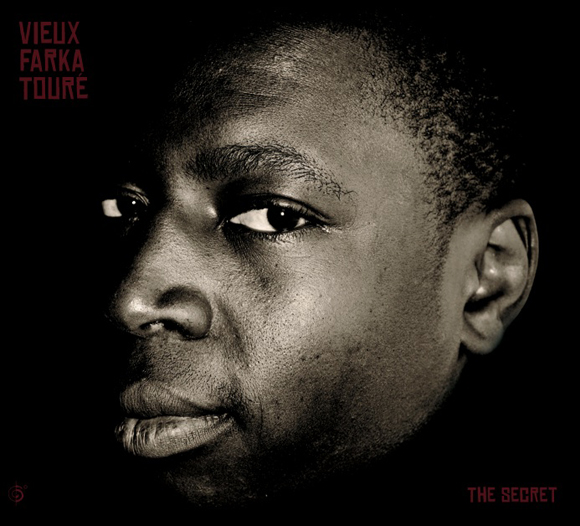
In advance of Vieux Farka Toure's upcoming album, The Secret out May 24, 2011 on Six Degrees Records, check out Aigna, the first single featuring Derek Trucks. The budding guitar hero kicks off a tour across the western US this Friday. If you haven't seen him live before, definitely take advantage of the opportunity.

Monday, May 9, 2011

Happy Mother's Day from The Very Best

To all the mothers and their children in the world who love good music that will make you dance, dig this.
04 The Very Best feat Moroka - Ndekha by Ragged Words

Wednesday, May 4, 2011

Interview with Orchestre Poly-Rythmo

Orchestre Poly Rythmo de Cotonou are some of the most influential and virtuosic African musicians ever to play a note. Similar to the Rail Band of Mali and Afrika 70 of Nigeria, OPR were superstars in their home of Benin and throughout West Africa in the 1970's. After Analog Africa put out two compilation albums in 2008 and 2009, the band was re-introduced to the world and their popularity sky-rocketed as more and more African music fans discovered their hypnotic sound. I had the honor of speaking with founding member Vincent Ahehehinnou and producer Elodie Maillot several weeks ago about their new record Cotonou Club, which recently came out on Strut Records, as well as a range of other topics. Our convo got cut a little short, but we managed to fit plenty in:

Orchestre Poly-Rythmo - Pardon by Strut

Elodie Maillot: Hello Marc!

MGA: Hi how are you?

Elodie: We're good, where are you calling from?

MGA: I'm in NY.

Elodie: Oh ok.

MGA: And you guys, where are you? In Benin or somewhere else?

Elodie: No, we're in London we're about to go to Paris. We have a big show over there.

MGA: That's great, let's get started then. My first question is who are some of the musicians to whom you listened and who inspired you the most to create your own sound?

Elodie: American musicians, French musicians, African musicians?

MGA: Any of those.

Vincent Ahehehinnou: Of course Fela, also Congolese music and James Brown and other American musicians.

MGA: Who are some of the other American musicians besides James Brown?

Vincent: Wilson Pickett, Aretha Franklin, Ray Charles, Elvis Presley so many…all of those people who were so successful in those years.

MGA: And some of the other African musicians, besides Fela?

Vincent: Fela and Franco from Congo mainly.

MGA: Vodun is such a major source of your sound. When one listens to your music which elements specifically could one hear which are taken from Vodun?

Vincent: We take Vodun rhythms and modernize them, we don't really take Vodun rhythms because they're traditional rhythms, we use elements of them and modernize them. If we want to do traditional Vodun rhythms, we need huge drums and some outfits, some clothes, so it's not possible to record these, so we take from it and to mix it with other influences.

MGA: Right, I understand. Since 2008, when the first compilation album was released on Analog Africa, how has your life changed since your music has been re-introduced to a contemporary international audience?

Vincent: It has changed significantly because in the beginning when people came to look for our records in Contonou, we were surprised we didn't really know what they were looking for. Some people came to buy the record and make a compilation, we didn't believe in it. We thought they'd take the cash and run away with it, get a little bit of money. We didn't think it would bring other things to us. The real change was when we came to Europe and were able to perform there. When we met Maillot we were surprised that people had heard our music before from the compilation.

MGA: Yea when that record came out it mad a big impression on a lot of people. And I'd imagine it was a really big event back in Benin as well to have the international music community take notice of something that had been going on locally for so long.

Vincent: For us it was a big big emotion especially for our generation and see old guys like us. Some people even cried when we told them we're traveling through Europe. We thought our time was finished. I think that has really changed. People look at us so much differently.

MGA: That's great. So since the band last recorded together, how much time has passed between then and now with the new record coming out on Strut?

Elodie: 25 years.

MGA: Wow, so how did the project come about? Did Strut approach the band or did the band approach the label?

Elodie: Actually I'm the producer. Strut is distributing the record in the US and Europe.

MGA: Oh ok, so did you approach the band?

Elodie: Well, yes, it's kind of a long story actually. I was a radio producer in France and I went to Benin to produce some radio shows in 2007. I knew the band from the record library at Radio France where we have about 1,000,000 records, so when I travelled I always listened. So I became a fan of the band and I thought if I go do some interviews and some work I could meet the orchestra. So when I started to ask some people, they told me no, they're dead, they're not playing anymore, you're not going to find them again. Then I find them when they were playing at the national independence day. I tried to record them live but the sound was really rough. I interviewed them, and they saw how much I love the band. So they told me, you help us, you help us travel and play in Europe, because we've never done this, not even one day outside Africa. I told them I don't think I can help them because I'm just a journalist. But they said yea but you can do it. You have to promise us, you can help us travel and make a good show. And then they keep on calling me, and then a few months later and I interviewed Franz Ferdinand, and we started to talk about African music and they told me Orchestre Poly-Rhythmo they signed a deal to put out a compilation with Luaka Bop, and how much they love the band and their dream is to play with them. They keep on calling me, to help them. On the other hand I saw there is an interest for musicians to play with them, and I wrote an article in a magazine in France for a jazz festival and I talked to them and they said they we are ready to program the festival and bring the band if you can manage to bring them which was a big long story because people wouldn't believe they're still alive and playing good. There's no record, just old compilations so there's no proof they're still alive and playing good. So I realized in order to find shows for them, I'd have to start producing an album. Financially, I had a car accident so I got some money from the insurance, and that's how it all started.

MGA: Well, that's an interesting story, the world will definitely thank you for your efforts. As soon as the compilations came out on Analog Africa the demand and popularity of the band sky-rocketed. I didn't even know who they were before the compilations came out and I'm a huge fan of African music. I've listened to the album and it's really great. What do you think is different about the new album, what can someone expect to hear in this album that will distinguish it from their previous work?

Elodie: You want me to ask Vincent?

MGA: I'd be interested in your opinion as well as Vincent's.

Elodie: Ok well in my opinion, the idea was to keep the energy and sound that is not always perfect and sometimes a bit funky, which is the great energy the band has. So the idea was to capture the same energy and to reach a certain level of quality of song which can reach radio stations and achieve a little more clean sound, not to change the song at all, to respect the song, but to embellish it a little bit because of the means. That was the idea. It's a real journey for us. You want me to ask him?

MGA: Yes Please.

Vincent: Well today, we're convinced there's no other album we can do. This is our best album because when we released a record in the 70's we did them very quickly, and our producer was just releasing it very local on vinyl, but this time we're making an album that can reach such an international audience which will be distributed worldwide on the same day. It's a real gift from god. It's very exciting for us to penetrate the rest of the world.

MGA: Do you think the popularity of African music has grown over the last several years?

Vincent: Yes, not only African music but all music. Which is what we realize and we're so happy about it.

MGA: You mentioned it a little earlier, but how has your music been received on your first European tour and your more recent tour dates?

Vincent: We had a warm welcome wherever we went. The music is perceived in a totally different way than in Benin. From country to country, but it's always really warm. People are clapping, people are standing, something people don't really do in Africa.

MGA: How does the reception vary between Europe and Africa?

Vincent: It's a very big difference because in Africa if you really play good, people don't really clap for you. In Europe, people really clap though. So when people really clap you can't disappoint people.

MGA: Does the band plan to tour The US and Canada?

Elodie: Yes in the summer.

MGA: Awesome, I hope to catch you guys.

Elodie: Yes it depends on the album, hopefully it will go well.

MGA: How does it make you feel to have your music compared to Fela Kuti.

Vincent: Fela is the greatest. We cannot be compared to Fela. We really respect him and his memory. We cannot really be compared to him, he is too big for us.

MGA: Really too big?

Vincent: Of course. Because of his political involvement, and also the way he stands on stage.

MGA: Did you ever see him perform live?

Vincent: Of course, we used to record in the same studio in Lagos. And the best tribute we could do we covered one of his songs at a big festival in 77 in front of 10,000 people. We played Lady. He saw us on TV and he came to the national arena. So its's important for us to give people tribute.

MGA: How did the dictatorship of Mathieu Kerekou effect the band and its ability to function?

Vincent: He really stopped people from going out. So there's no music without and audience. He put a curfew at 11 o'clock so it killed all the nightclubs. Some bars tried to play music in the night and some people got arrested

Tuesday, April 19, 2011

Les Nubians' New Album Drops Today

Nu Revolution, the new album from Afro-Parisian chanteuses Les Nubians, drops today from Shanachie Entertainment. Les Nubians blend an array of soulful afrocentric elements to create a truly unique sound. Singing in French and English, mixing various African elements with neo-soul, jazz, funk, and afrobeat this album is definitely in a genre all its own. The sisters sing of a Nu Revolution, bringing love to the forefront of society in place of war and negativity.

Les Nubians are touring the US kicking things off Thursday in Philly. They'll be performing material from their new album and spreading their positive message of love and empowerment ten cities from coast to coast. Definitely check them out when they come near you.

April
21- Philadelphia, PA @ Kimmel Center for Performing Arts
29- New York, NY @ BB Kings

May
11- Cleveland, OH @ Beachland Ballroom
12- Minneapolis, MN @ Dakota Jazz Club
13- Minneapolis, MN @ Dakota Jazz Club
14- Chicago, IL @ The Shrine
17- Seattle, WA @ The Triple Door
18- Seattle, WA @ The Triple Door
19- San Francisco, CA @ Yoshi’s (2 shows)
20- San Francisco, CA @ Yoshi’s (2 shows)
21- Los Angeles, CA @ Conga Room
22- San Diego, CA @ Anthology
24- Santa Cruz, CA @ Kuumbwa Jazz Center (2 shows)

In the meantime, check out this dope new video for Afrodance:

Les Nubians - Afrodance from Nice Dissolve on Vimeo.

New Single from The People's Champs

Dig the new single, Family, from Brooklyn based afro-funk ensemble The People's Champs. They'll be throwin down for their EP Release Party May 6th at Piano's. Dig the single until the EP drops.


Tuesday, April 12, 2011

Tony Allen in Toronto this Friday Night

Without Tony Allen, there would be no afrobeat. While, I certainly believe that to be the case, Fela Anikulapo Kuti once said the same thing. The legendary drummer and African musical icon is touring N. America starting tomorrow night at LPR in New York and continuing on in Toronto Friday night at the Phoenix Theater presented by Small World Music. If you can catch him when he comes to a city near you, definitely take advantage of the opportunity. In the meantime, check out an interview I did with him last year:

MGA: My first question is you’re about to embark on a N. American Tour, are there any dates about which you’re particularly excited?

Tony Allen: No, not really.

MGA: So you’re excited about the whole tour?

Tony Allen: I’ll be coming to NY, and Toronto, and then I go back through the states and do the rest of my shows in the states.

MGA: I heard you’re going to be on Jimmy Fallon with The Roots and ?uestlove?

Tony Allen: Yes, in New York.

MGA: Do you have a relationship with ?uestlove or the Roots? Have you played with them before?

Tony Allen: I’ve never played with them before, but I’ve seen them play. You know,` so now we’re going to be working on the same program.

MGA: And you like The Roots?

Tony Allen: Oh yes, ?uestlove is a drummer himself too, so…

MGA: Right. So on your new album, Secret Agent, I’ve been listening to it a lot recently. How would you describe the direction you’re taking your music on your new album?

Tony Allen: Direction? It’s afrobeat I’m playing, you know? And I like different styles of afrobeat. It just comes from evolution.

MGA: Cool, cool. So throughout your career, I’ve heard a lot of your albums, you’ve been doing it for a long time. You’ve always demonstrated openness to new ideas, new sounds and instruments. For instance on Secret Agent you feature an accordion, which is not traditionally seen as an “afrobeat instrument” per se. Could you describe you the way that new sounds inspire you and the process by which you incorporate them into your music?

Tony Allen: Well, you know, it’s music. It’s not the instrument, the instrument doesn’t play itself anyway, you know? The point is the music of the instrument, whichever instrument I put in my music. It’s the sound, it’s soundwise, you know? It’s not a question of which instrument I use, it’s what I compose.

MGA: So if a sound catches your ear, it doesn’t matter what it is, you just want to put it into your music.

Tony Allen: Exactly.

MGA: Cool. So how would you describe how your music has developed and evolved from your first solo album, NEPA, to now, with Secret Agent.

Tony Allen: Ah, I will not try to explain it, I’ve done enough explaining. I’ve done NEPA, I’ve done Afrobeat Express, I’ve done Black Voices, I’ve done Psycho on The Bus, I’ve done Homecooking, Lagos No Shaking, and this one. Every one has its direction, but its still afrobeat.

MGA: One of the most famous quotes that’s most often associated with your name is from Fela Kuti, who said, ‘Without Tony Allen, there would be no afrobeat.’ Could you elaborate on that a bit, and explain how you contributed to afrobeat’s creation?

Tony Allen: Well, that is something that people are not supposed to be saying that, people that have been watching me, people that spoke with me. I’m just doing my job. I’m doing my job, and I’m creating. I like to be creating all the time because I can’t just keep playing the same shit all the time, you know? I have to create something else, whether people are going to take it or not, I’m just going to be moving forward, you know? That’s all.

MGA: What musicians or musical styles were you and Fela listening to when you were coming of age in Nigeria?

Tony Allen: I was playing my music before I met Fela, you know? There is a lot of music in the country, all different types of music. Jazz, waltz, two-step, tango, whatever, highlife, before I met Fela. Then when I met Fela, he said ‘ok, stop playing all those other styles’ and dictating.

MGA: Right, and do your own thing.

Tony Allen: Right.

MGA: So who are you listening to right now that’s inspiring, what are you listening to these days that you find interesting?

Tony Allen: Right now, I’m working with my band, I just finished our latest album, and now we’re taking things on the road, so that’s what I’m concentrating on now.

MGA: Cool, so what other bands or musicians within the genre of afrobeat do you find interesting or inspiring?

Tony Allen: Ah well, there’s a lot of them. Everybody’s doing their own style, so as long as they have the afrobeat, it’s cool. I don’t want to commit myself for anything. They’re all good.

MGA: You don’t want to single anybody out since there’s so many out there?

Tony Allen: No, I don’t.

MGA: What is your take on the Antibals-Bill T. Jones FELA! Production currently running on Broadway in New York?

Tony Allen: It’s afrobeat, so it’s cool. I’ve said before I would not comment.

MGA: Have you noticed any increased interest from the mainstream culture due to the popularity of the play?

Tony Allen: No.

MGA: Really, you haven’t noticed any increased interest?

Tony Allen: Well, when I said I wouldn’t comment, it means that… well you know there’s positive side of things. I can’t analyze everything, but it’s very good to expose afrobeat to people that never know what afrobeat is. I know there’s a positive side of things there, and I just hope it expresses enough to make more spring up.

MGA: Right, right. So in what direction do you see afrobeat evolving as more and more musicians take up afrobeat? Do you think the electronic side of things will take the lead with artists like Wunmi is going to grow, or do you think on the instrumental side of things?

Tony Allen: Well, it’s ok, I just know that afrobeat is music that has to be played by human beings together. I’ve experimented with electronics in my music but not taking out the drums that’s supposed to be played with it, so it depends on what everybody likes, you know? That’s why I don’t like to criticize what everybody’s else is playing. I just know what I’m playing.

MGA: Are there any goals or things you’d like to accomplish by the end of your career?

Tony Allen: The point is I look forward, I look forward. I never preview nothing, with my music. The day I decide, the day is there. If I decide I like something then I do it. There is a song on Secret Agent called Celebration.

MGA: Right, Celebrate Your Life, that’s a great song.

Tony Allen: Celebrate means celebrate everything, not just Christmas, or marriage, or anything it means celebrate all the time. Why should we not celebrate every day? Every day. You see, because every time you can go to sleep and wake up the next day, that’s something to celebrate. Because whatever you do is whatever you do. Simple as that.

MGA: Yea man, I agree 100%.

Tony Allen: Haha, you agree 100%?

MGA: Absolutely. I agree, I think every day should be a celebration.

Tony Allen: Absolutely, that’s the way I look at my life.

MGA: One last question. Your album Psycho On The Bus, I’ve always thought of as the quintessential afro-dub album. Were there any particular dub artists that inspired you to make that album?

Tony Allen: No it was a collaboration. It’s music. It’s afrobeat with a certain production style. You know, I have other things to think about.

Monday, April 11, 2011

Hammock House 'Africa Caribe'

What do you get when you take classic cuts of Fania Records' glory days and hand them over to Joe Claussell, one of the dopest Nuyorican house producers alive? Africa Caribe, the new compilation of remixes out May 17, 2011 on Fania Records. This album is extremely danceable, featuring remixes of Fania greats such as Lou Perez, Celia Cruz, Eddie Palmieri, Mongo Santamaria, and Ray Barretto. Dig Claussell's remix of Santamaria's jam Mambo Mongo:

Thursday, April 7, 2011

Club D'Elf-Electric Morocco Land Tour

Photobucket

If you dig deep, entrancing songs, dig this: Electric Morocco Land, the new album from Club D'Elf, the Boston-based ensemble led by Mike Rivard. Featuring Moroccan rhythms, instruments, and musicians, Club D'Elf is a revolving cast of musicians including John Medeski and DJ Logic. Electric Moroccoland includes everything from deep, downtempo trance to danceable groove-laden funk. Rivard, a bassist by trade, was first turned on to traditional Moroccan Gnawan music while studying at The Berklee School of Music. He eventually learned to play the sintir, and fell in love with the music. Club D'Elf has since earned a reputation as an original and signature voice in the Boston music scene. They're touring the Northeast starting tomorrow night at World Cafe in Philly. Def check em out when they come near you:

04/21/2011, Thu Portland, ME Port City Music Hall, 504 Congress St. Tix: $10 adv/$15 door/$28 VIP, Doors Open: 8:00 pm, Show: 9:00 pm with John Medeski. Ph: 207.899.4990

04/22/2011, Fri
Cambridge, MA Lizard Lounge, 1667 Mass Ave. Tix: $15 adv/$17 door, Doors Open: 7:00 pm, Show: 8:00 pm with John Medeski. Ph: 617.547.0759

04/23/2011, Sat
Newmarket, NH Stone Church, 5 Granite St. Tix: $8 adv./$10 door, Doors Open: 7:00 pm, Show: 9:00 pm with Dave Tronzo. Ph: 603.659.0878

04/30/2011, Sat
Cambridge, MA Mimouna Festvial @ Harvard University, Northwest Labs Bldg, Harvard University 52 Oxford St Tix: $30 Adv./$40 Door/$20 Student, Doors Open: 9:00 pm, Show: 10:15 pm Ph: 617.531.4610.

Monday, April 4, 2011

Shotnez-New Collaboration from Members of BBB

Shotnez, the new album/side project featuring members of Balkan Beat Box, is out tomorrow on JDub Records. This album takes the inventive production style and unmistakable energy of BBB and combines them with industrial sounding elements of crime-Jazz and trash rock. Check out the first single, Stolen Goods. If you like what you hear, dig the whole album tomorrow.