Wednesday, February 23, 2011

Panamerika Mixtape

Need some Latin flavor? This Panamerika Mixtape from Telesforo will add some sabor picante to your day...

Tropic-All Mixtape por Telesforo - PanameriKa by PanamériKa

Monday, February 21, 2011

Ministry of Corruption Mixtape

Dig this new mixtape from Kahli Abdu, a burgeoning Naija MC.

Wednesday, February 16, 2011

Afrika21 Mixtape

Afrika21 is a new initiative from Society HAE to create a massive platform to introduce 21 of Africa's emerging young creatives in the fields of art, music, fashion and film. The Afrika21 project will give audiences a first hand look at 21st century contemporary African culture, and open up a new dialogue about Africa as a go to market place for creative synergy. The first installment of this project is the AFRIKA21 MIXTAPE featuring the work of Africa's young musicians who are re-defining African music and the continent in general.

The Afrika21 Mixtape vol. 1 by afrika21

AFRIKA21 vol. 1 Playlist

1.Lakeside - BLK JKS (South Africa)
2.Heartbeat - Nneka (Nigeria)
3.If You Ask Me - Omawumi (Nigeria)
4.See Me Now - MPHO (South Africa)
5.Maria - Tumi (South Africa)
6.Emergency - Iyadede (Rwanda)
7.Dream Chasin - Chiddy Bang (Nigeria)
8.Yaa I Get It - Shad (Rwanda)
9.Mshini Wam - Spoek Mathambo (South Africa)
10.Brand New Masquerade - Mister Rae (Nigeria)
11.Fear Fear Factor - Kahli Abdu (Nigeria)
12.A L'Heure D'Ete - Saison Sèche - Baloji (Congo)
13.Bonafide - Tabi Bonney (Togo)
14.Music & Lights - Hip Hop Pantsula (South Africa)
15.Share My Blessings - Naeto C feat. Asa (Nigeria)
16.Warm Heart of Africa - The Very Best ft. Theophilus London (Malawi)
17.Licky - African Rock (US)
18.Pracatatumba - Cabo Snoop (Angola)
19.Lagos Town - Afrikan Boy (Nigeria)

Monday, February 14, 2011

Album Review: Ebo Taylor-Life Stories

As I've said before, Ebo Taylor is one of the funkiest people to ever walk the earth. Life Stories, his second collaboration with Strut Records set to be released April 11, 2011, is a retrospective compilation showcasing his work with several ensembles throughout his career. Any lover of African funk has to take notice of Ebo Taylor. His ability as a composer and arranger put him in an elite class of musicians and allowed for him to collaborate with some of the best musicians in West Africa throughout the 1960's and 70's.

Taylor released his first internationally distributed studio album, Love and Death, on Strut late last year. Life Stories represents his songwriting and arranging work with several different artists and ensembles. Taylor's ability to combine African rhythmic elements with the American funk aesthetic set him apart from other musicians of his generation. Talylor's signature wah-pedal infused guitar lines combined with inventive horn lines distinguished him as an arranger. Life Stories captures that signature style on several tracks throughout.

If you're serious about African funk or you simply have a passing interest, you should def check out this comp. To amass this much music in one place would have taken years of crate digging and several trips to Africa. Strut has done all the work, so take full advantage.

Ebo Taylor - Heaven by afrobeatblog

New Track from Bajah and Saadi

Dig this new collaboration between Saadi and Bajah:

Lights Up NYC Featuring Bajah-Like for Free Download! by Dither Down

Wednesday, February 2, 2011

Interview with Gabe Roth (aka Bosco Mann)

Gabe Roth (aka Bosco Mann) is the founder, chief engineer, producer and songwriter of Daptone Records, the label that's brought acts like Antibalas, The Budos Band, Lee Fields, Charles Bradley, Sharon Jones and The Dap-Kings to the world, to name a few. Roth is one the most sought after producers in the music business due to his knack for capturing that quintessential soul sound. Of course, it helps to have some of the most soul-savvy musicians around in your house band, something Roth would be quick to point out. I had the privilege of speaking with Gabe a couple weeks ago in advance of Sharon Jones and The Dap-Kings upcoming show in my hometown of Buffalo, NY. SJDK are playing six dates in the Northeast starting tomorrow night in Ithaca, NY. Then beginning the second week in March, they'll be touring through the south. Def keep an eye out for when they come to your hometown as these road warriors are known for their live shows as much as they are their soulful records:

Marc Gabriel Amigone: Thanks for taking the time to talk to me, I'm a huge fan of the whole Daptone Family, Budos Band, Antibalas, Lee Fields and what not.

Gabe Roth: Cool, thanks.

Marc Gabriel Amigone: So my first question, is when I reviewed I Learned the Hard Way, I wrote that it represented a progression from previous albums in that it was deeper, more soulful, more emotional, less funky raw grooves. Would you agree with that characterization?

Gabe Roth: Um, I feel like that's true, the direction the studio albums have evolved. I feel like the live show is still based around more of a dance groove, but as far as the songwriting I think Sharon as a singer has really grown a lot. She's gotten stronger and stronger. I think songwriting wise and arrangement wise I think the band is getting more expressive. It's more of a deeper groove, you know?

MGA: Right I feel like the first couple albums were more just dance party records. I Learned the Hard Way is deeper than that, it's just different.

GR: Actually it's funny you say that because we actually recorded a lot of up-tempo and down-tempo stuff that didn't actually make the album so part of it was the sequencing. Part of it was trying to figure out what we wanted to keep, what went well together, and what was going to make it a strong album. There's a song called When I Come Home that we put out on a 45 and didn't put on the album. He Said I Can wasn't on the album, the vocal version of The Reason, there's a lot of up-tempo joints, an instrumental song called Thunder Clap, there's a number of things that actually didn't make the record that were recorded during that session that were kind of up-tempo.

MGA: So you're putting a lot of that stuff out on 45's?

GR: Yea, we've got plans for some of it, some of it we don't. It's almost all really good, it came out great. We worked really hard, that's the hardest record I ever had to pick songs for because usually we record 16 or 17 songs for a record and it's usually pretty obvious which ones are the best. Maybe we'll fight a little bit about it but it's not that hard getting it down to 10 or 12 songs. On that record though, we recorded like 20 songs and every one of them was somebody's favorite.

MGA: That's gotta be tough to leave stuff on the cutting room floor like that.

GR: It's a good problem to have.

MGA: I know you've gotten this question a few times before, but Daptone's motto is putting soul up. What's your definition of Soul?

GR: Oh, that's tough. Man I've gotten that question before, but it never gets any easier to answer. I think soul to me is something that's honest. It touches people in a real way, in a genuine way and reaches them in a genuine way. Sharon always says what comes from the heart reaches the heart, and I think that could be a real heartfelt blues or it could be a really heavy rhythm or it could be anywhere in between. It could be a ballad, it could be a song about the government, it could be anything, but if you're singing it with your heart and you're playing it with your heart, and people are able to feel it that way. Obviously there's always the academics of the genre. Who's going to file stuff where in a record store but beyond that there's some country music that's real soulful. There's music from all over the world that's soulful. There's classical music that's soulful. I think obviously it's subjective, it has to be subjective because not everybody's going to relate to everything. If everyone related to it, it wouldn't be saying much.

MGA: Right, it's whose soul you're reaching.

GR: Yea it's something about the common human experience you gotta brush up against.

MGA: I bought I Learned The Hard Way for my Dad for Xmas. He grew up on Motown, Stax, soul and R&B, so he’s digging Sharon Jones. Have you had other people tell you that?

GR: Yea that's one thing that's helped us be successful is the music has a pretty broad appeal that way. People have different contexts for it. People into hip-hop used to hearing those kind of grooves sampled or people that are into modern R&B hear the roots of it. People who are into punk rock can identify with the way we put the business together and the independent spirit of it, you know? The idea of the individuality of it. But it's definitely real commonplace for us for people that are into Motown and Stax, it's def a real easy connection for them.

MGA: How has your life changed since SJDK has blown up, and started touring the world, playing the late night TV circuit, selling out the apollo, etc.?

GR: Man I started doing this about 15 years ago. So yea, it's changed a lot. In 15 years I've been married and divorced and slept on a lot of different couches. So now I'm doing great, I've got a house and two kids here in California. My personal life is doing great, there's a lot of other factors and stuff. I guess I've changed a lot, I've probably slowed down a bit.

MGA: That's gotta be gratifying to know, to use a played out term, you never sold out, you stayed indy the whole time and you've done it your own way and that's something to really be proud of.

GR: Yea staying indy was real hard. The thing I'm really proud of is not so much my personal gains, but there's a big family of people who have done well and are making an honest living now from making good music. I'm real proud of being able to be fair to them. You know, Sharon was finally able to buy a house down south, she's been trying to that for years, and last year she finally did it, and that's a huge thing for me man, because that's something she's been talking about forever. Living out in the projects out in Far Rockaway, and she never really owned anything. That's huge for me, I'm real happy about that.

MGA: That's awesome.

GR: The guys in the band are starting to have kids and to be able to feed their families that's a really good thing.

MGA: Yea man you guys are really working hard. You're touring all over the world, every dollar make you're working hard for, so you guys deserve all your success.

GR: Thank you.

MGA: In your opinion, what were the moments that allowed for SJDK rise to where they are today? Being featured on the Up in the Air soundtrack? The Back to Black album?

GR: I think being on Fresh Air with Terry Gross was a big thing for us, we got to a lot of people quickly that way. There's a lot of other things along the way like Sharon being in the Great Debaters and the Amy Winehouse Record, being sampled by Kanye West, there's a bunch of things like that that certain people saw and think this has been some kind of overnight success, but it's been very gradual, you know every city we went, we went from 20 people to 50 and 50 to 100 and 100 to 200 to 400, we just kept going back. There's very few places we've been where we've had 1,000 people show up the first time we were there.

MGA: Does the reception to the music vary when you tour to different parts of the world?

GR: Honestly, the short answer is no. It varies from town to town. It varies from night to night and it varies from crowd to crowd. I think you'll find London has more in common with New York than it does with Manchester. You know what I mean, and New York has more in common with London than it does with Buffalo. It's definitely different scenes in every town, the size of the town and how much music is there. And also what the context is. There's plenty of small towns all over the world where some local dj has been throwing a funk party for years and people are into certain music. All along we've been very fortunate to be able to connect with audiences in a pretty consistent way.

MGA: Yea when I think you're playing soulful music, that will be common, everyone can relate to that. I wanted to ask you, the song The Stroll, by Binky Griptite and the Mellomatics, that's one of the funkiest songs I've ever heard.

GR: Aw man that's good to hear, I'll tell him you said that.

MGA: Does Daptone plan to put out an EP/LP of Binky Griptite and the Mellomatics?

GR: Man you know that's a painful question the truth is we tried to record one and it came out no good, so we felt like we could do better, and there was some frustration with it. We ended up putting out a handful of 45's but I would love to put a record out of Binky, Binky needs to have a record out more than anyone in the world.

MGA: With the Antibalas re-issue of Who is this America? coming out last year, what parallels do you draw between when the album first came out and today between the political climate than and now? How it applied to what was going on then, what's going on now...?

GR: I wrote that song Who Is This America? and I think it was relevant but I don't know if it was necessarily timely in that way. The idea was, for a lot of the world and even a lot of Americans, people don't really understand the intensity of the plurality of this country, you talk about America and you talk about some of the most racist people in the world but also some of the most progressive people in the world. Some of the people who are the most conservative and the most liberal. There's so much extremes here and it's all America. I think that's really hard for the world to understand. When Bush was president people looked at us like such a backward nation and being on tour with the band, you'd see that. You'd go to places and during the worst of it you almost had to hit the stage with an apology. It reflected on Americans. What kind of people, what kind of country could elect this guy? By the same token when Obama got elected, Bush was way too conservative and crazy and violent and incompetent, he could never get elected in England or in Germany or in some place like that, but by the same token Barack Obama could never get elected there either. I think it's really hard for people to get around the idea of how plural this country is. So that is still relevant. Obviously the war situation is slightly different, not as different as I'd like it to be. I don't know how much I can really speak to that. I'm not as politically engaged as I should be.

MGA: Well, I definitely hear what you're saying. A lot of what was going on then is going on today, but a lot is changed. It's a different world. It's just the timing of all of it. I think you guys toured in the fall of 2004 when that album came out, and it just got re-issued in 2010 in time for the 2010 election. I found it interesting, the timing of it all. When I listen to that song, I feel like it's like a horror movie soundtrack. Did you have any of that in mind when you wrote the song?

GR: Not really no.

MGA: That was the last album for which you were a full-time member of Antibalas?

GR: Yea.

MGA: So you stepped away to work on other projects?

GR: Well the thing was, at the beginning there was a lot of guys who were in Antibalas and The Dap-Kings. Binky Griptite, myself, Victor Axelrod, Martin Perna, Fernando Velez there was a lot of us in both bands, Todd Simon. As both bands started touring more and getting more successful you had to start throwing in subs here and there to keep the lineup covered and at a certain point it just became too much. I think everybody kind of went where they were needed most. Victor really needed to go with Antibalas and Martin. Me and Binky needed to go with The Dap-Kings. It was a little painful at the time. I still miss touring with those guys, those were some of the funnest tours I ever did. We played a lot of really great shows, we had a really fun time at a lot of those shows.

MGA: Do you feel like The Daktaris Soul Explosion (the mock 1970's re-issue afrobeat record that came out in 97) was the beginning of the afrobeat revival movement?

GR: It's funny we almost didn't put that record out. We recorded it before Fela died. There weren't a lot of people that were into that kind of music at that time, we're talking like 1996 or something. And everybody we played it for said it sounded messed up, like distorted or something. We weren't really going to put it out, but after Fela died there was some more interest, and we decided to put it out.

MGA: Really, that's interesting.

GR: There's an interesting record coming out you'd probably dig, you know Amayo and his side project, The Fu Arkest-Ra?

MGA: Oh yea, I've seen them live a bunch of times.

GR: Well, he's got this whole concept like an epic Kung-Fu-Lion Dancing-African Proverb-Zeus-Opera epic story that's been in his head for years. All of the Fu songs are part of that story. When I had a studio in his basement at the Afro-Spot in Brooklyn where we recorded Dap-Dippin and Pure Cane Sugar and Talkatif and a lot of stuff I started recording with him the Fu Arkest-Ra record. We got through the rhythm section stuff, and we never really finished it and he got evicted and I got evicted and things went sour, not between us, but with the landlords. We always talked about getting back into it and re-recording, but I was always so busy with touring and he was trying to keep bands together. And it never really came together. So recently, he came back to me, actually it was about ten years ago he came to me and he wanted to record again, and I was out of town I didn't really have time, so I recommended him to Tommy Breneck to Dunham Studios to see if he was into it. And I guess he brought some rhythm section there, and it wasn't really happening and Tommy wasn't really sure about it. So Tommy said do you have some tape we can record on, so he said oh yea, we can record on this old blank tape, so the tape he brought on was the rhythm section tape we recorded ten years before. So Tommy put it on and was like wow, this shit is bangin, it's weird but it's been so long its been 10 years, but we forgot about that sound from that time. So Tommy brought in all the original guys, Stuart Bogie and Martin Perna, to do some overdubs, and I went in and mastered it the last time I was in New York. We're trying to put out a 12-inch of it, but it's kind of an interesting story because it was a record that was recorded and then 10 years later the rest of it was put down. Hopefully we'll put that out sometime soon.

MGA: I would love to hear that. The first time I saw Fu I was totally blown away. So do you feel like The Daktaris was the beginning of the afrobeat revival movement along with Antibalas?

GR: The Daktaris was definitely a catalyst, obviously I think Fela was the ultimate catalyst, he architected the whole thing. But in terms of reviving Fela's music I think The Daktaris acted as a catalyst for getting a handful of guys in Brooklyn excited about that sound. The Daktaris wasn't really a touring band, I think we did one show as The Daktaris. That really inspired Martin to get this thing together and get Antibalas going.

MGA: How did you and Martin first meet?

GR: Ah man, I don't even remember. It was the early 90's, we were at NYU, he just moved there from DC or something. He was playing in a ska band called the Defactos when I met him. I was recording for them. Fernando was in that same band. I think I met him around then. Him and Mike Wagner also became the horn section for Cinshango this latin ska band that I toured with first as the sound engineer and then as a guitarist. We were roommates for years, we lived in several different apartments together in New York, 3 or 4 different apartments. We had a really good time. It's always good when I go Austin when I get to see him.

MGA: Yea I was in Austin for ACL. He's a really cool cat. I always like talking to him, he's got a unique perspective on things.

MGA: So there's a growing movement behind vinyl these days, more and more people are buying record players and records. More record labels are putting things out on vinyl. Do you take any credit for the movement behind the growing enthusiasm for vinyl and record players?

GR: I would say we contributed alongside a lot of other people, but we definitely can't take any credit for that. I think that's a natural thing. Especially with CD's disappearing I think people who are active listeners, people who are discerning, people with a real aesthetic concrete connection to music and want to hold something and touch something and want to actually see the artwork for the album bigger than on the screen of their phone or their watch or whatever. People like that, as CD's disappear are going to go more and more to vinyl. The way that people are using mp3's it's getting so far from the experience people used to have with records. I think it's a pretty strong reaction of people who really want to have a personal connection to the music, want to sit down and listen to a record and hear the songs in the order they were supposed to be heard. Listen to them on big speakers, and not listen to them on really crappy audio files. People are going to get back into it. People who like to roll their joints on a record, they're never going to be able to do that on a mp3.

MGA: What 5 pieces of vinyl that you own do you value the most?

GR: Ah man, I'll answer that question different than I will tomorrow morning. It changes from time to time. That's a hard one. Otis Redding Dock of the Bay would probably be up there. Johnny Shines and Little Willie John-Talk to Me. Lately I'm Aware of Love, Jerry Butler. It's hard to say, there's a lot of them.

MGA: Do you have a favorite Fela record?

GR: Let me think about that. That's a good one too. Why Black Man Dey Suffer Today?, that's a good one.

MGA: London Scene has always been my favorite. It's one of the early ones. So what's coming down the pike from Daptone we should be aware of?

GR: The Charles Bradley album is about to drop. That's a great album. I think that's going to do a lot to get his name out there. That's the biggest one. There's an El Rego record that I just mastered yesterday. It's a guy from Benin, a bunch of recordings from the 60's and 70's, you'd probably be really into that It's all kind of Afro-funk, music from Benin. That'll be out in a few months. We're going to try to do another Naomi Shelton and The Gospel Queens record this year. We're working on a real bluesy R&B Lee Fields record. Like I said there's some more Sharon stuff coming out. There's some more Dunham stuff like Budos IV.

Tuesday, February 1, 2011

New Video from Planet Rump


This video is pretty much self-explanatory. Dig it.

Wednesday, January 26, 2011

Africa Africa Africa pt. 4

It's about that time again...DJ Underdog and The Lunchbox Theory have joined forces yet again to unleash a frenzy of afrobeat, afro-house and a variety of other danceable beats in the form of a mixtape. Underdog is joined by DJ Cam Jus this time around who brings some new elements to the party. As always, prepare for the danceparty that will undoubtedly ensue.

Tuesday, January 25, 2011

Album Review: Chopteeth Live-Chopteeth Afrofunk Big Band

If you've ever been to an afrobeat show, you know what it's like to experience the power of a ten-piece ensemble unleashing their energy as it reverberates throughout the crowd. If you haven't, this album is about as close as you can come to the real thing. Chopteeth Afrofunk Big Band is a D.C. area afrofunk ensemble that fuses a variety of Afro-influenced musical styles. Their self-titled debut, released in 2008, made waves in the international music community and introduced themselves to the world. Chopteeth Live, out February 1, 2011 on Grigri Discs, validates Chopteeth as a band not only capable of going into the studio and laying down a world-class album but also able to hit the stage and kick out some dance-floor shaking jams.
Chopteeth Live kicks off with a cover of JJD, a song originally recorded by Fela Anikulapo Kuti. The call and response horn arrangements grab your attention from the jump and are immediately followed up with a multi-layered percussion attack. The energy of the horns sets the tone for the rest of the album featuring covers of tunes from several different countries in Africa including Ghana, Senegal, The Congo, and Guinea. As displayed on their debut studio album, Chopteeth is able to pay homage to a variety of African styles while incorporating their own individual style.

While listening to this album will give you an idea of what it's like to be in the audience at a Chopteeth show, experiencing it live is something totally different. If you can't get to D.C., go find an afrobeat band close to where you are. Seeing live afrobeat is like nothing else. In the meantime, however, this album is a great substitute.

Chopteeth - J.J.D. by afrobeatblog

Thursday, January 20, 2011

SLF Afro-Dub Session One Year Anniversary Party

Photobucket
Sound Liberation Front (SLF), an arts and music organization based in Brooklyn, presents the Afro-Dub Sessions One-Year Anniversary Party at Rose Live Music in Williamsburg, BK on Saturday, January 29. Afro-Dub Sessions combines live music and DJs to celebrate the best in Dub and African-influenced sounds.

To celebrate the success of their one-year run, Afro-Dub Sessions will feature special guest DJ Carter Van Pelt, host of WKCR 89.9FM's Eastern Standard Time, a Jamaican music program that airs live every Saturday from 6-10 a.m. The show highlights roots reggae of the ʼ70s and early ʼ80s, Rocksteady from the mid ʼ60s and Ska from the early ʼ60s. Carter Van Pelt also co-hosts the weekly Roots Rock Reggae party at Motor City Bar, and organizes the popular Coney Island Reggae Soundsystem parties, one of which SLF co-hosted this past summer.

He will be joined by renowned MCʼs, K Vibes and Willow Wilson. K Vibes has been singing reggae professionally for nearly 20 years. She was one of the last of a new generation of Brooklyn-based reggae artists to record for iconic Jamaican record producer Clement “Coxsone” Dodd, scoring a cult-hit with “Frenemies” in 2001. Willow Wilson was widely recorded at the height of Brooklynʼs digital reggae/dancehall era in the mid/late 1980s. His voice can be heard on dozens of recordings, including a full length self-titled LP, made primarily for Whitfield Henryʼs prolific Wittyʼs label. His latest release, a cover of Bob Marleyʼs “Slave Driver” for Taitu Records, reveals his strong affinity for singer Dennis Brown.

As it does every month, Afro-Dub Sessions will also feature a pair of live performances by resident Afro-Dub band Super Hi-Fi, which has been packing the house with their creative melding of Afrobeat, Dub, live remixing and special guest appearances. The five-piece collective features members of Aphrodesia, Slavic Soul Party, Peopleʼs Champs, and the Blue Man Group. SLFʼs resident DJs Linh, Q-Mastah and Lil Tiger will bring their diverse musical selections to the turntables to round out the night.

Afro-Dub Sessions is dedicated to the idea that dub, born in Jamaica, and African musical styles like Afrobeat, Afropop and Afrofunk are natural partners in the origins of global dance music. Each month SLF explores these connections by hosting a different guest DJ specializing in Dub or African-influenced styles.

Sunday, January 16, 2011

New Track from Swedish Beatmaker

Dengi Riddim - Makks by Makks

Dig this track from Swedish afr0-inspired beatmaker Makks.

Tuesday, January 11, 2011

New Video from Spoek Mathambo

This video is quite literally nasty...

Monday, January 3, 2011

The Afrobeat Blog Best of 2010

2011 is officially upon us. Now is the time to assess where we're at, where we're going, and what has been. As such, I've put together my list of the best music released in 2010 that reverberated in range of my ears. I've expanded the list to include a section for comps as well as an honorable mention section to recognize some great music that didn't quite make my top 15. If I left anything out, feel free to let me know, as it's never too late to share! Here's to more great music in 2011!

Best Albums of 2010
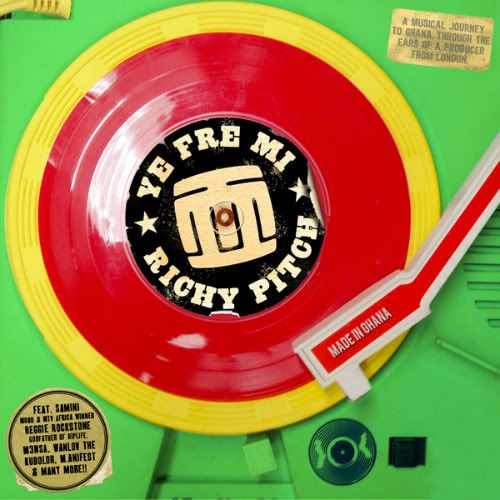
1. Ye Fre Me Richy Pitch-Richy Pitch
2. Seahorse and the Storyteller-Michael Leonhart and The Avramina 7

3. Blue Eyed Black Boy-Balkan Beat Box
4. Afrocubism-Afrocubism
5. La Difference-Salif Keita
6. Donso-Donso
7. Medicine Show # 3: Beat Konducta In Africa-Madlib
8. Love and Death-Ebo Taylor
9. The Electric Sound of Johnny Arrow-Cochemea Gastelum
10. The Budos Band III-The Budos Band
11. Rise and Shine-Sierra Leone's Refugee All-Stars
12. Wake Up!-John Legend & The Roots
13. Oyo-Angelique Kidjo
14. Secret Agent-Tony Allen
15. Adje Adje-Elikeh

Best Compilations
1. Black Man's Cry-Now Again
2. Afrobeat Airways-Analog Africa
3. Angola Soundtrack-Analog Africa
4. Lagos Disco Inferno-Academy
5. Afrolution Vol. 2-Afrolution

Honorable Mention (In no particular order):
Seu Jorge and Almaz
Music Frees All-Emefe
Lero Lero-Luisa Maita
I Learned the Hard Way-Sharon Jones and The Dap-Kings
82-Just A Band
El Existential-Grupo Fantasma
Ali and Toumani-Ali Farka Toure and Toumani Diabate
London Afrobeat Collective-London Afrobeat Collective
Fried Speakers-Monareta
Thieves!-Zongo Junction

Monday, December 27, 2010

Album Review: Music Frees All-Emefe

Music Frees All, the debut album from NY based afro-funk ensemble Emefe, is a seriously funky collection of eight songs packed with energy and attitude. The album was recorded in the basement of drummer/band-leader Miles Arntzen, and you can hear that raw, untapped energy of young musicians pouring their hearts out onto all eight tracks on the album. Emefe is a highly talented group of musicians dedicated to paying homage to the tradition of Fela Anikulapo Kuti and the musicians who have followed in his lineage. This album is a great initial offering and a sign of even greater things to come if the group can continue to work together.

Music Frees All features several tracks that range in tempo and dynamic. Uptempo tracks such as Free Yourself, 221 Groove and Oh, That's What It Is are highly danceable, energizing tracks that will make any dancefloor jump. Slower tracks like The War and Consequence and Sumo are more sneaky, relaxed grooves that showcase Emefe's horn-section and its ability to accentuate winding, languishing lines. There are also tracks that display a range of tempos and dynamics within a single composition such as the opener Jump and Stomp and The Night.

As afrobeat continues to grow and flourish as a growing movement in multiple cities across the globe, bands continue to sprout from every direction. Emefe represents that growing trend of musicians riding the cresting afrobeat wave. While certain bands will label themselves afrobeat without delving into the history of the music or putting in the time to learn the form, Emefe clearly understands and respects those who have came before them in the afro-tradition. Judging from the quality of the horn and percussion arrangements on this album, they know what afrobeat is really about and how to build on its tradition.

Dig the album for whatever price you like here.

Sunday, December 26, 2010

Ariya Astrobeat Arkestra Remix

It seems these days more and more afrobeat inspired bands are popping up all over the globe. It truly is a beautiful thing. Check out this remixed track from UK-based outfit Ariya Astrobeat Arkestra.


Herma Puma Jollys - (Ariya Astrobeat Remix) by Herma Puma

Zozo Afrobeat on BreakThru Radio


Check out this dope video courtesy of BreakThru Radio that takes you inside the world of afrobeat with NY-based ensemble Zozo Afrobeat as your tour guide.

Friday, December 17, 2010

The Wudos Band Mixtape


What do you get when you take the funky beats of the Budos Band, and combine them with the ferocious lyrics of the Wu-Tang Clan? The Wudos Band, yes, that's right, the two best things to ever come out of Staten Island have joined forces. 8 mashups of Budos jams with Wu-Tang lyrics. What more could you ask for?


Sunday, December 12, 2010

Some Afro-Love from Australia

Harmon - Melbourne World Edits #1 by congotardis
Check out this dope track from Melbourne beatmaker Paul Harmon...

Wednesday, December 1, 2010

Album Review: Analog Africa No. 9-Angola Soundtrack

Analog Africa has unearthed yet another treasure chest of African funky goodness. This time around they draw from Angola, the Southwestern African nation, with Angola Soundtrack. Featuring several hypnotic styles such as Semba, Merengue, Kazukuta, and Rebita, these are songs you most likely have never heard, although due to the styles they amalgamate, they have a familiar feel. The percussion backdrop, the entrancing guitars, the call and response vocals, will all be familiar to any listener with an interest in post-colonial African musical styles. Highlife, afro-funk, and Mande swing all take elements from the musical styles of the Americas and combine them with homegrown percussion and vocal styles. The popular music of 1970's Angola is no different, but these songs definitely have their own style unique to the cultural factors present in Angola as opposed to Nigeria, Ghana, or Mali.

Analog Africa has an amazing track record of hunting down original music on the African continent, re-packaging it, and introducing it to a new audience. The world is a better place for it, and they have helped contribute to the budding revival African music is currently enjoying. Angola Soundtrack is the most recent release in the line of compilation albums that continue to push that revival forward. If you've enjoyed any of their other compilations thus far, definitely check this one out as well. You will not be disappointed.


Zé Da Lua - Ulungu Wami by afrobeatblog